Agricultural
18 February 2026
Interview: Fauji Fertilizer CTO Syed Aamir Abbas discusses innovation, process improvement and affordability
Written by Thomas Willatt
Few companies sit as centrally in Pakistan’s agricultural value chain as Fauji Fertilizer Company (FFC). The group represents around 2.6 million t/a of urea nameplate capacity with roughly 670,000 t/a of DAP capacity. As the country’s sole domestic DAP producer, FFC’s operational performance carries direct implications for farm economics and food supply, in a market where fertilizer is critical to achieving the required crop yields.
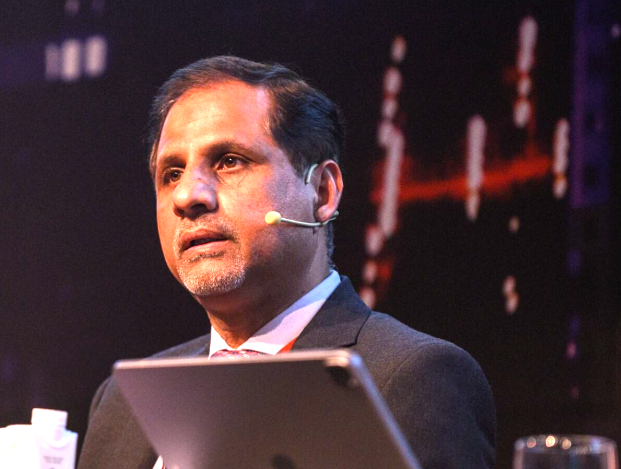
Against that backdrop, Syed Aamir Abbas brings a perspective shaped by both scale and execution. FFC’s Chief Technical Officer and chemical engineer by training, Abbas’ 30-plus year career spans project development, operations and commercial evaluation. Thomas Willatt of CRU Communities met Abbas on the sidelines of the recent CRU Nitrogen + Syngas Conference in Barcelona, to discuss feedstock security, emerging production pathways, digitalisation and the industry’s enduring obligation to deliver both sustainability and affordability.
Interviewer: Natural gas supply reliability has been a critical challenge for Pakistan’s fertilizer sector. How is Fauji Fertilizer approaching feedstock security and operational continuity in the near term?
Syed Aamir Abbas: Let me give you an overview. There are two kinds of fertiliser plants in Pakistan; one on the national pipeline supply and the other on a dedicated pipeline supply for fertilizer producers. Those on the national pipeline network are severely hit by gas curtailments, especially in winter when supply is diverted for domestic use. The other one, which also includes FFC plants, is on a dedicated supply from the Mari gas field. This has provided a stable supply for 40 years and accounts for 80% of urea production.
Now, the Mari reservoir’s pressure is declining. The fertilizer industry is jointly investing $250 million in pressure boosting stations to manage this, an expense fertilizer producers have to absorb. This solution secures supply until 2029. Fortunately, a new Mari reservoir, Ghazij, has also been discovered and dedicated to the fertiliser industry, which will secure supply for another 10-12 years for national as well as dedicated network users.
The emerging challenge is to fulfil the future urea demand, which is expected to increase by a million tonnes by 2031. As there is no new gas for this additional demand, feedstock diversification is the way out. Pakistan has abundant coal reserves, and FFC is now putting up a project to produce urea from coal. We have completed a bankable feasibility study for a coal gasification-based urea plant. We will also integrate it with a green hydrogen facility, where surplus CO2 from gasification will react with green ammonia to make additional urea. This is the overall landscape.
Interviewer: Is that coal project your primary technological focus, or are there other areas you’re concentrating on?
Syed Aamir Abbas: I see our technological challenges in two parts. The first is at our existing plants. We are in constant touch with technology companies to bring in innovations, keeping our plants technologically current and energy efficient. We benchmark our plants against newer ones in the Middle East and find it very reasonably placed.
The second part is on the product side. Due to farmer awareness, the demand is for enhanced efficiency fertilizers. We are doing a lot of R&D in this area and have already introduced 3-4 new products, with more in the pipeline. We are also promoting balanced fertilization and are the only diammonium phosphate (DAP) manufacturer in Pakistan. We are also importing potash to supply MOP (Muriate of Potash) and SOP (Sulphate of Potash) for farmers. As CTO, I oversee both the plant and product innovation sides.
Interviewer: Is all of your production consumed locally, or do you have plans to export?
Syed Aamir Abbas: Currently, because gas is a precious resource, the government does not allow urea exports. Besides, local demand is strong. However, Pakistani urea is priced lower than international urea, which leads to smuggling into neighbouring markets. We suggested to the government that while we can’t export urea made from precious natural gas, we can export urea made from coal. The government tends to agree with this. So, we would eventually go into exports to the region once we put this coal-based plant into operation. It will take three to four years, so we expect it to be online by 2030 or 2031. We are currently in the process of awarding the FEED (Front-End Engineering Design) contract.
Interviewer: At this year’s Nitrogen + Syngas event there’s a great collection of experts and innovators from across the space. As CTO, what emerging syngas or hydrogen technologies are you prioritising, and how do you prefer to work with partners on these innovations?
Syed Aamir Abbas: Yes, definitely. For instance, I recently met with a licensor who introduced a granulation technology that can replace urea-formaldehyde with different additives. This is important to us because urea-formaldehyde is often not required for the export market. They also mentioned the possibility of putting micronutrients directly into the urea melt before it’s granulated. We learned this technology is in the research phase but could be commercialised soon, so it’s an area we are definitely interested in.
Besides that, we’re looking at technologies for environmental controls. We were just talking to a company that makes low CO and NOx burners for primary reformers. High CO and NOx at the exhaust is always a concern at higher than design plant loads, so we are very interested in that technology for controlling emissions.
Interviewer: The Sona Centres initiative positions Fauji as a service platform beyond just product distribution. How does this model support farmer productivity and your sustainability goals?
Syed Aamir Abbas: The Sona Centres are a great management initiative. The primary reason was a need from farmers for a stabilising force in the market, so dealers don’t fleece them during shortages. It’s a direct B2C initiative where we sell directly to the farmer.
Secondly, we use the centres to give farmers access to credit. Fauji Fertilizer also owns a bank in Pakistan, and we use its services to provide easy credit for other inputs like pesticides and seeds.
Finally, we are collaborating with big international companies to bring new products and innovations directly to farmers through these centres. It’s a great step. Currently, we have more than 250 centres for now and we plan to expand further. The initiative is in place and working very well.
Interviewer: How is Fauji Fertilizer looking at Industry 4.0 and AI to improve operations?
Syed Aamir Abbas: We have two main AI initiatives underway. First, we are installing AI-enabled APC (Advanced Process Control) systems in all our plants. Our plants are 40 years old, and to reach the next level of performance, we need AI. This is expected to give us a 2-3% improvement in energy efficiency. We can save fuel and increase production. The investment is returned in just six months.
Second, we are bringing AI into all our business processes: maintenance, warehouse systems, digitalisation of documentation, sales & marketing and agri services. These initiatives are converting our 40-year-old industry using the latest available technologies. We can’t change the heavy equipment altogether, but we can bring in these new systems.
Interviewer: Finally, is there a message you have for the wider fertiliser community as it faces these global challenges?
Syed Aamir Abbas: First, I must appreciate CRU. You have been doing a great service to the industry by bringing all the experts under one roof from different parts of the world. At a conference like this, you talk to them and get to know what is happening around the world. This is a wonderful service.
Towards the industry side, I must say that our efforts should be on the small steps to bring in whatever efficiency into the process is possible. But we must also take care of the countries that cannot adopt expensive new technology. Food security is the biggest challenge in my region, South Asia. New environmental interventions like green ammonia are increasing the cost of production.
You must keep in mind that the farmer there is very poor and cannot afford these. If you increase food prices, the general public cannot afford to eat. So, the message from this platform should be that while these environmental initiatives are good, they must be balanced with affordability. We must also take care of the food security that is critical for everybody.