Fertilizer International 530 Jan-Feb 2026
23 January 2026
Boron and its effects on coffee plant nutrition
MICRONUTRIENTS
Boron and its effects on coffee plant nutrition
Field research has shown that coffee is highly sensitive to boron, and that fertilization with this micronutrient can improve crop quality and yield. Fabiano Silvestrin of U.S. Borax reviews the evidence – with special reference to Brazil and Latin America.
Deficiency signs and symptoms
There is a high occurrence of boron deficiency in many of the world’s coffee producing countries. Leaf analysis of 16,000 coffee plants from Brazil, Colombia, El Salvador, Guatemala, Kenya, Tanzania, Uganda, and Vietnam, for example, revealed that boron concentrations were below the critical level (< 45 mg/kg) in almost one-third of plants (29%) tested1 .
Boron deficiency in coffee plants typically causes:
• Stunted root growth and development
• Flower drop
• Poor fruit formation
• Reduction in productivity.
Deficiency usually occurs if:
• Soil boron levels are below 1.0 mg/dm3
• Excessive amounts of limestone have been applied
• High doses of potassium chloride are used
• There are long periods of drought or heavy rainfall.
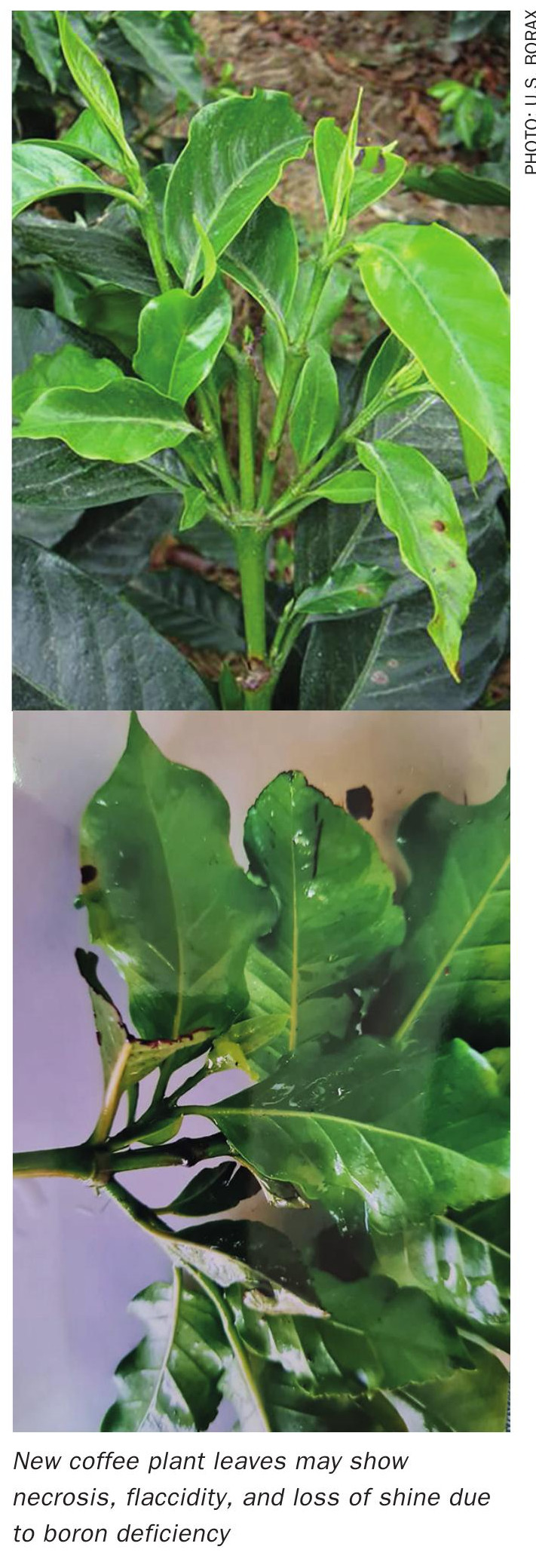
The symptoms of boron deficiency initially appear on new leaves, which become deformed, tapered and small with rounded edges. They may also show necrosis, flaccidity, and loss of shine (see photos below). Leaves and terminal buds then become corrugated and deformed, as deficiency worsens, with this eventually leading to the death of the shoots.
Boron is essential in the parts of plants where active growth occurs – meristematic tissue – such as the root tips, developing leaves and shoots. Consequently, boron deficiency is often observed as changes to the plant structure in these growth zones.
“Boron is a nutrient of great importance in coffee cultivation, with positive agronomic effects that improve crop quality and yield.”
Notable deficiency signs in coffee plants include a marked reduction in the root system, as well as death of the ends of the roots2. These negative effects reduce the root’s ability to absorb water and nutrients, making coffee plants more sensitive to drought and impairing their ability to respond to fertilization.
BORON IN COFFEE CULTIVATION: SUMMARY OF THE EVIDENCE
Scientific studies have conclusively demonstrated the beneficial effects of boron on coffee crop productivity and quality. Boron is required for the growth and development of coffee plants, making adequate nutrition essential.
Conversely, boron deficiency results in negative biochemical, anatomical, and physiological changes. According to the literature, boron in plants plays an important physiological role in:
• Hormonal regulation
• Flowering
• The transport of photoassimilates (especially sugars)
• The structure of cell walls and membranes.
In coffee plants (cultivar Catuaí Amarelo), available soil boron has been found to have a strong influence on the Relative Harvest Index – correlating with parameters such as leaf boron content, branch length, and number of leaves3 . These variables are vital for coffee plant productivity (yield) because vertical growth determines the formation of nodes and the plagiotropic branches which give rise to leaves and inflorescences4. Subsequent flowering depends on the number of branches, branch length, the number of nodes, and the number of leaves per node, since many nodes without leaves do not flower.
A study examining the effects of boron on coffee seedlings (Catuaí Vermelho cultivar) found that coffee production increased significantly with the addition of boron due to its influence on plant height, stem diameter, length of plagiotropic branches and number of leaf pairs5. The best results were obtained 19 months after planting with boron application at doses of 1 g/plant and 2 g/plant. Other researchers found a positive relationship between branch length and leaf boron content6 .
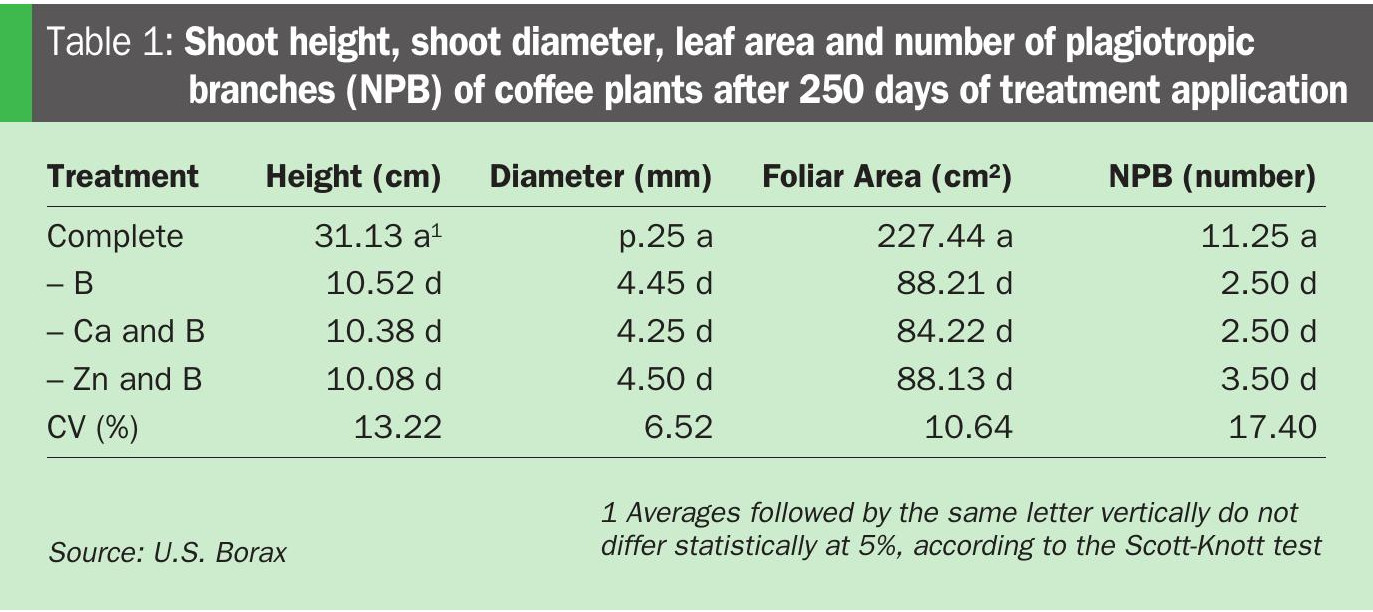
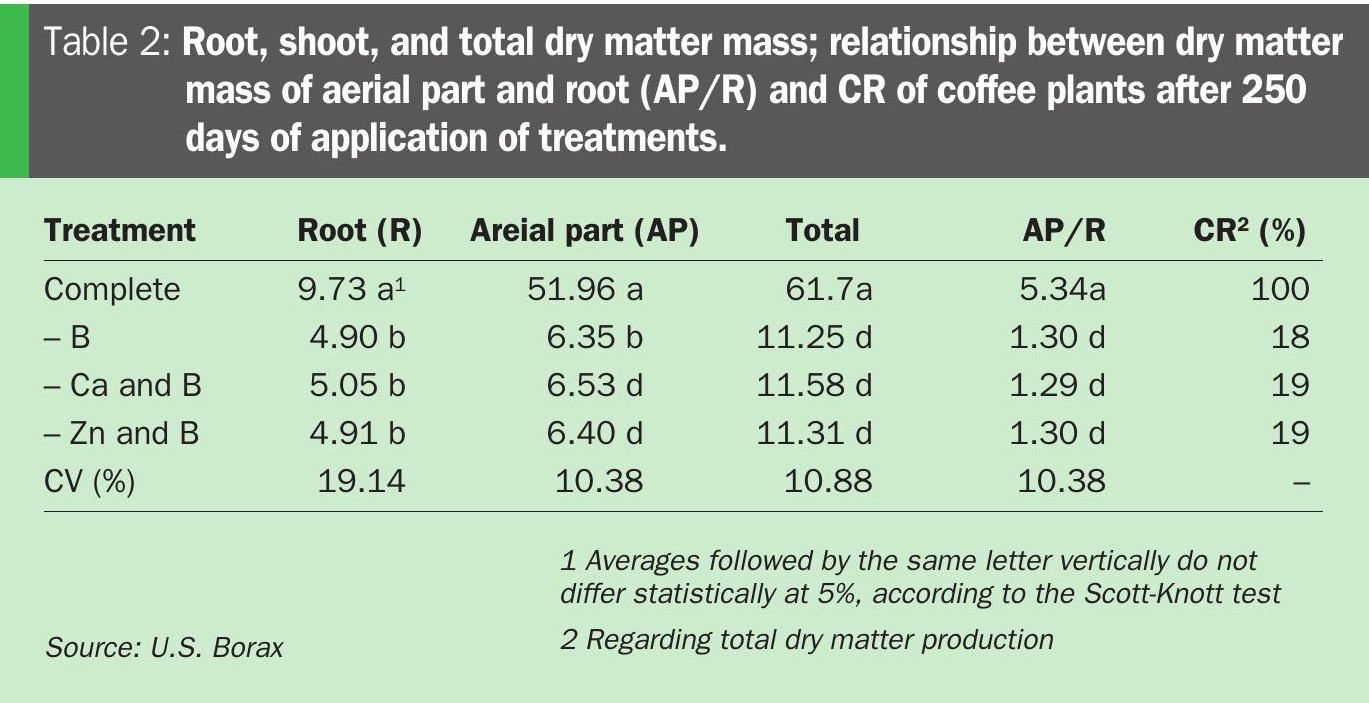
The effects of the absence of four nutrients (calcium, boron, copper, and zinc) on coffee plant (Coffea arabica L.) growth, leaf nutrient concentration, and visual signs of deficiency were evaluated in a greenhouse study7 . This study reported a reduction in the height and diameter of shoots, the leaf area, the number of plagiotropic branches (NRP) (Table 1) and root and shoot dry matter (Tables 2). These changes were observed for coffee plants grown in nutrient solutions in three different scenarios: without boron alone; without boron and calcium; without boron and zinc.
Boron demand is greatest during the reproductive phase of coffee plants. Being essential for the formation and germination of pollen grains and pollen tubes, boron is needed to ensure coffee plant flowers are properly fertilized. Conversely, pollen tube formation, germination and viability of pollen grains are all severely impacted by low boron availability. The adequate supply of boron during the reproductive phase – because it increases flower retention and fruit and seed development – is therefore fundamental to coffee productivity.
A study of Catuaí Amarelo coffee plants revealed that flowers are a surprisingly strong sink for boron. The element was present in the flowers of this cultivar at a concentration of 37.3 mg/kg. In coffee plants aged 30 months, boron was also distributed between flowers at 95.7 g/ha (11.8%), in leaves at 549.8 g/ha (68%) and in branches at 166.1 g/ha (20.2%).
Cell wall damage due to boron deficiency can result in numerous secondary physiological, biochemical, and anatomical effects. Coffee plant leaves with boron deficiency have fewer and malformed stomata, for example, and will therefore have a lower transpiration rate. Boron deficiency also disrupts the xylem vessels (vascular bundles) in the main vein of coffee plants leaves – impeding the transport of water, nutrients, and photoassimilates8.
Boron increases coffee yield
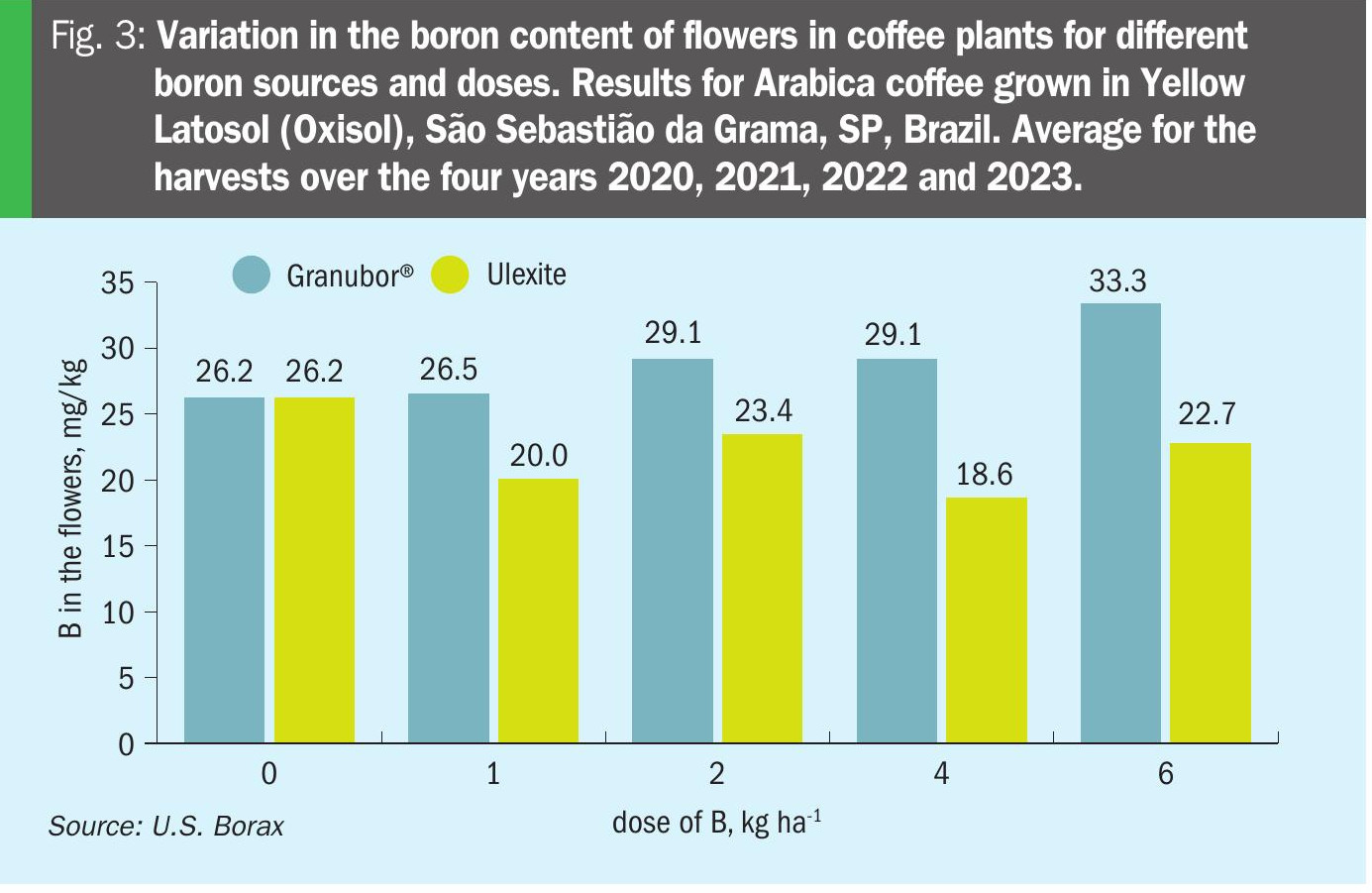
The effects of boron sources and doses on coffee cultivation were evaluated as part of a long-term field trial carried out by U.S. Borax | Rio Tinto in partnership with Brazil’s Instituto Agronômico de Capinas (IAC). This research was conducted over four years covering the 2020-2023 annual coffee harvests.
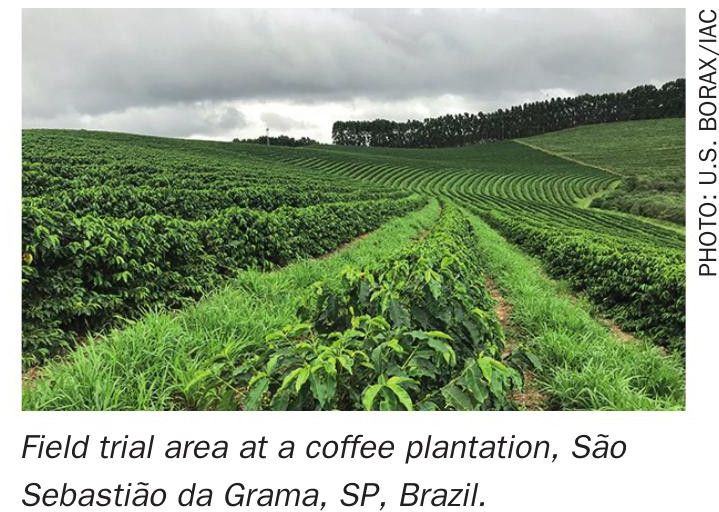
The field trial took place at a coffee plantation in São Sebastião da Grama, São Paulo, Brazil. This site, which is planted with the cultivar Catuaí Amarelo on a ‘Yellow Latosol’ (Oxisol) soil, is 1,180 metres above sea level. During the trial, two boron sources (sodium tetraborate pentahydrate and ulexite) and five boron doses (0.0, 1.0, 2.0, 4.0 and 6.0 kg B per hectare) were tested. Fertilizers were applied annually as three split applications, timed from the beginning of flowering until the beginning of summer.
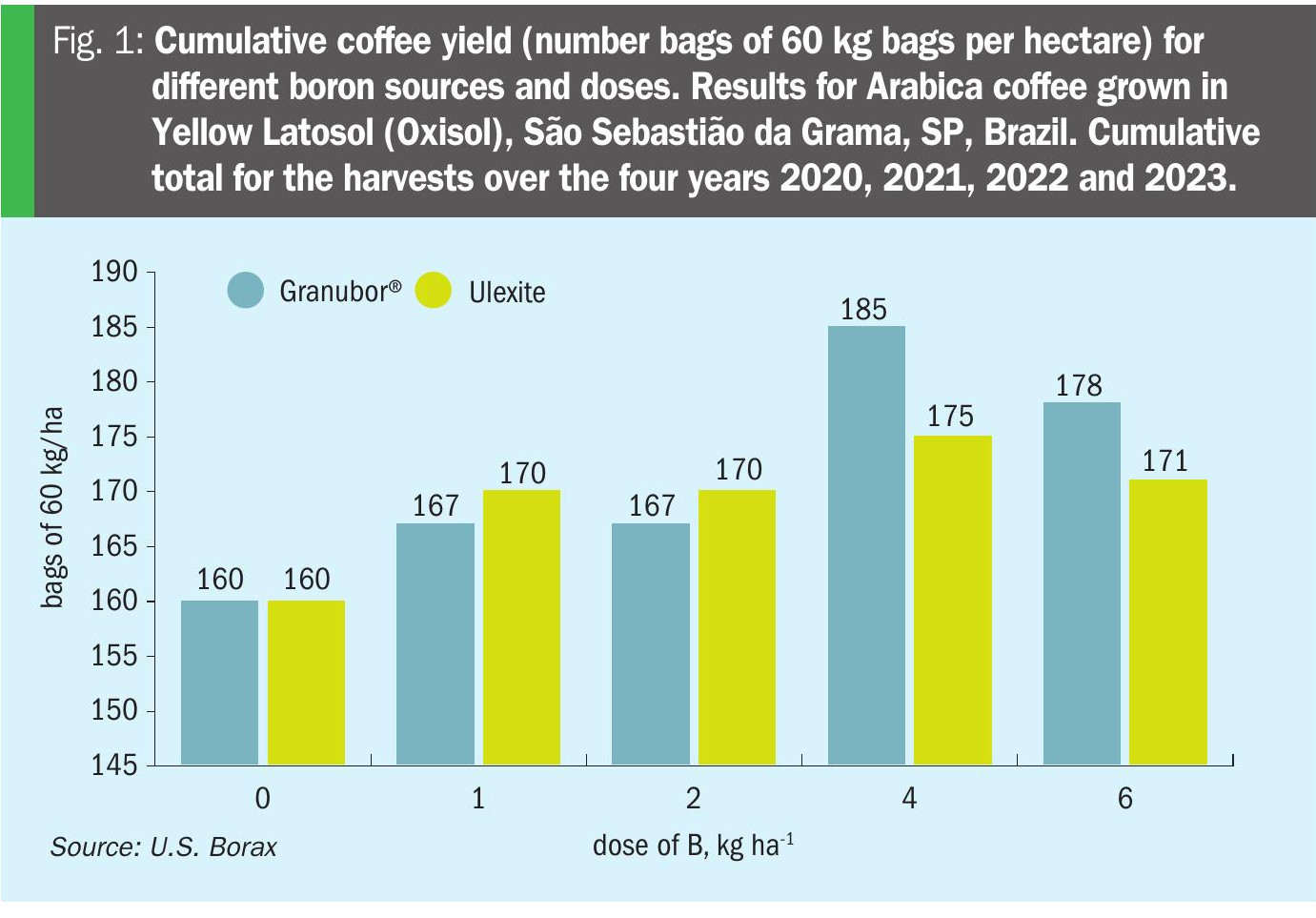
Coffee productivity (yield) was reported as the number bags of 60 kg bags per hectare, based on the cumulative total for the four 2020-2023 harvests. Foliar and floral boron contents of the coffee plants were also evaluated.
The application of 4.0 kg/ha of boron using sodium tetraborate pentahydrate (Granubor®) delivered the highest coffee productivity (185 bags/ha), a yield increase of 15.7% (extra 25 bags/ ha) compared to the control treatment (Figure 1).
The highest coffee yield was achieved using sodium tetraborate pentahydrate (Granubor®) as the boron source at doses of 4 kg/ha and 6 kg/ha. The greatest differences in yields between the sources – sodium tetraborate pentahydrate (Granubor®) versus ulexite – was also seen at these two dose rates.
These results illustrate the strong yield response of coffee crops to boron application. Soil boron content (0.7 g/dm3) at the trial site was also below the critical reference level (>1.0 mg/kg of boron) for perennial crops9. The presence of a highly deficient soil highlighted the plantation’s high potential for a boron fertilization response – as was subsequently confirmed and verified by the trial results (Figure 1).
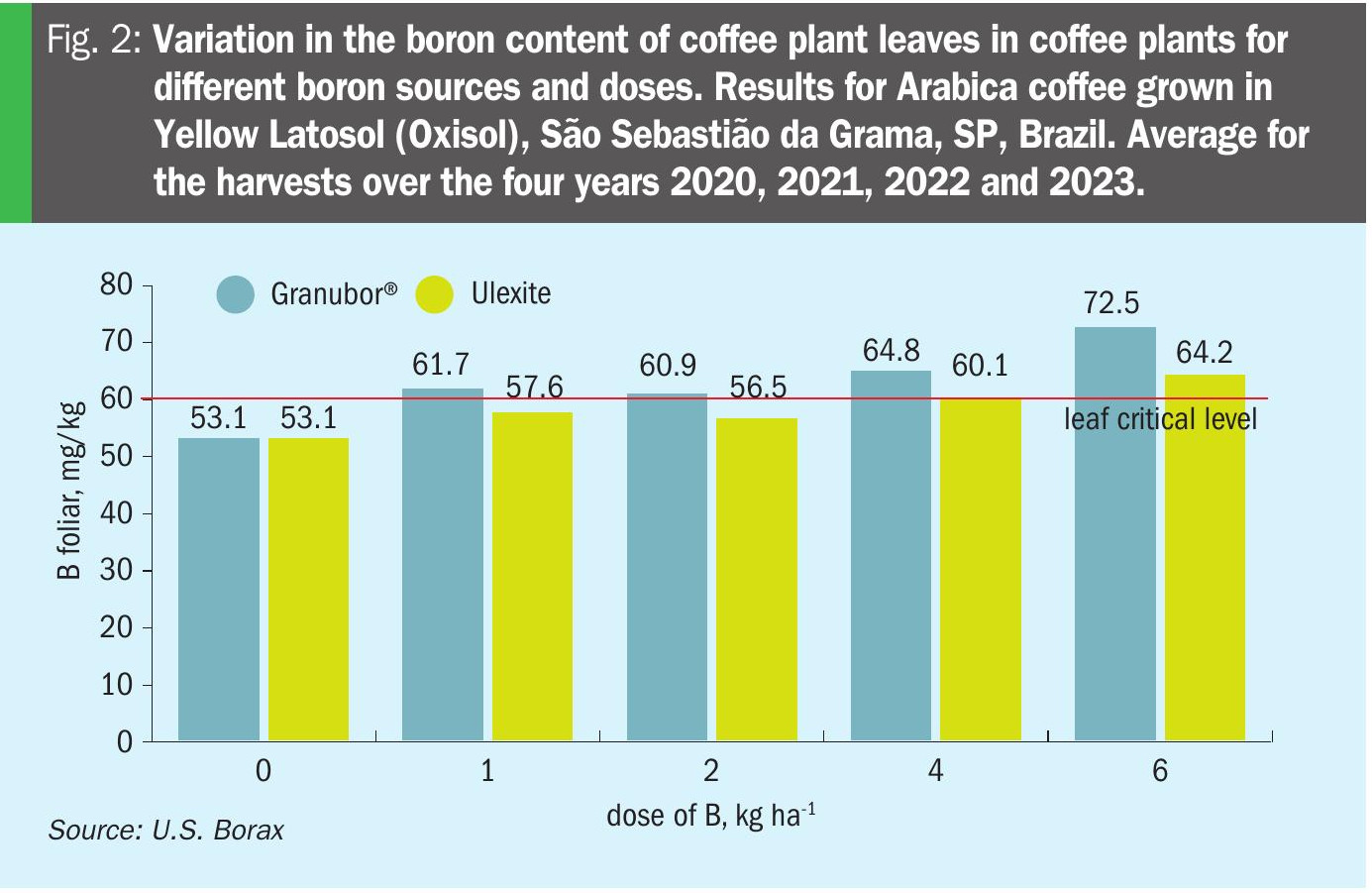
Maintaining foliar boron content within this sufficiency range is necessary for adequate coffee plant nutrition. This is because boron within the leaf acts as a reserve stock that plants can access throughout different phenological phases, especially in periods of high demand such as flowering and fruiting.
As observed for coffee yield, the highest boron levels in leaves – as well as the greatest differences between sources – were obtained using boron doses of 4 kg/ha and 6 kg/ha. Ulexite only reached the minimum sufficiency for leaf boron when the applied dosage reached 4 kg/ha of boron, showing the limited boron release from this source (Figure 2).
Take action!
The studies and results presented in this article show the great importance of boron as a nutrient for coffee cultivation, with positive agronomic effects that improve the quality and yield of this crop. U.S. Borax recommends periodic soil fertility assessments and crop tissue sampling to determine the potential response to boron fertilization.
About the author
Fabiano Silvestrin is Principal Advisor, Global Market Development Agriculture at U.S. Borax
References