Asia
17 April 2025
Press Release: Wastech Group Partners with Pursell Agri-Tech to Revolutionize Sustainable Fertilizer Production in Malaysia
SYLACAUGA, ALA. – 16 April 2025
New Fertilizer Coating Facility in Malaysia Set to Advance Agricultural Efficiency and Sustainability Across Southeast Asia
In a groundbreaking move, Wastech Group, an integrated agricultural and landscaping solutions provider based in Southeast Asia, is pleased to announce its joint venture with Pursell Agri-Tech, a leading coating technology innovator based in Sylacauga, Alabama, to establish a state-of-the-art facility in Malaysia dedicated to the production of advanced controlled release fertilizers (CRFs).
This partnership will combine Wastech’s expertise in agricultural solutions with Pursell’s cutting-edge technology to create a sustainable fertilizer that will revolutionize farming practices across Malaysia and the Southeast Asia region.
This joint venture highlights a strong commitment to bringing new technologies to Malaysia, further solidifying the country’s role as a key hub for agricultural innovation. The collaboration will not only enhance the country’s agricultural productivity but also create job opportunities and foster economic growth in the region.
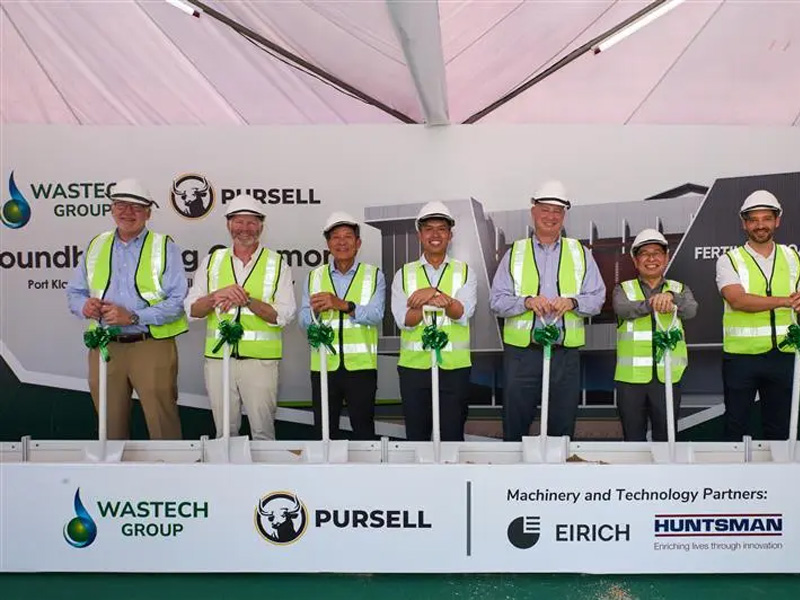
From left to right: Tim Ferguson, Pursell CEO; Joe Brady, Pursell CFO; Simon Hii, Wastech Group, Managing Director; Nicholas Hii, Wastech Group Executive Director; Allen Sanders, Pursell COO; Mark Kwek, Huntsman Singapore, APAC Consumer Goods & Textile Marketing Manager; Benedikt Berberich, Eirich Machines Director of Operations
Innovation Behind CRFs and Its Impact on Agriculture
CRFs represents the next step in sustainable farming technology. By gradually releasing nutrients over an extended period, CRFs ensure plants receive a consistent supply of essential nutrients, reducing the need for frequent fertilizer applications. This innovative approach results in improved nutrient efficiency, lower labor costs, and less fertilizer waste, making CRFs the essential tool for farmers looking to optimize their resources.
“This partnership with Pursell marks a significant step forward in our commitment to sustainable agriculture in Southeast Asia,” said Nicholas Hii, Executive Director of Wastech Group. “By integrating Pursell’s cutting-edge coating technology with Wastech’s deep expertise in the region, we are well-positioned to deliver high-performance, cost-effective, and environmentally responsible fertilizer solutions that meet the needs of our plantation and agricultural customers.”
Sustainability at the Core of the Joint Venture
This partnership underscores the shared commitment of both Wastech and Pursell to sustainability. CRF technology helps mitigate nutrient runoff, reduces environmental pollution, and promotes healthier soils. By optimizing the use of fertilizers, CRFs ensure that less is wasted, making it a key player in promoting sustainable farming practices.
“As consumers and businesses demand more sustainable agricultural products, this joint venture with Pursell aligns with our mission to provide innovative solutions that reduce agriculture’s environmental footprint while enhancing crop productivity,” said Nicholas Hii. “Together, we are setting a new standard for sustainable fertilizer solutions that meet the needs of the modern agricultural industry.”
Creating Jobs and Supporting Local Economies
The new facility will create a range of job opportunities in Malaysia, boosting the local economy and supporting the agricultural workforce. The collaboration also promotes the development of local talent by providing training and job prospects in the sustainable agriculture sector.
“We are committed to hiring local talent and creating jobs in the region, contributing to the overall development of Malaysia’s agriculture industry,” said Nicholas Hii. “This joint venture will also open doors to export opportunities within the Southeast Asia nations, further strengthening Malaysia’s position in the global agricultural market.”
CRF Expansion into the Southeast Asia Markets
The joint venture will enhance the ability to export CRF technology across the Southeast Asia region. As one of the world’s largest agricultural exporters, Malaysia plays a pivotal role in the global supply of agricultural commodities, including palm oil, rubber, and rice. CRF technology, with its long-term financial and environmental benefits, is expected to play an essential role in strengthening the sustainability and competitiveness of agriculture across the Southeast Asia.
“Partnering with Wastech to build a plant in Malaysia is ideal. It’s located near key substrate and material suppliers and creates opportunities to address the diverse nutrition needs of customers in the region in a predictable, prescriptive and profitable way,” said Tim Ferguson, Pursell CEO.
Beyond Malaysia, the facility will serve markets across Southeast Asia, as well as Australia, New Zealand, South Korea, and Japan, where demand for advanced fertilizer technologies is growing due to increasing sustainability initiatives and evolving agricultural practices. By combining Pursell’s precision nutrient delivery technology with Wastech’s market expertise and agronomic insights, the partnership aims to drive efficiency, productivity, and sustainability across these key agricultural regions.