Market Insight
Market Insight courtesy of Argus Media

Market Insight courtesy of Argus Media

We look ahead at fertilizer industry prospects for the next 12 months, including the key economic and agricultural drivers likely to shape the market during 2022.

State-of-the art technologies offered by thyssenkrupp, Casale and Stamicarbon are helping make nitrates production more secure and sustainable.

A proper leak detection system for loose liners of high-pressure urea equipment is the number one safeguard for any urea plant, as has been proven by detailed safety studies and incidents investigations. However, leak detection systems easily choke especially when urea is present in the leaking solution. When no urea is present, the ammonium carbamate will dissociate above 60°C when flashing to atmospheric pressure in the leak detection system. But, when urea is present, it can solidify and at higher temperatures polymerise into biuret and triuret, which have even higher crystallisation temperatures. An early and reliable leak detection system is therefore very important. UreaKnowHow.com has developed such a system: the state-of-the-art AMMO LASER Leak Detection System.
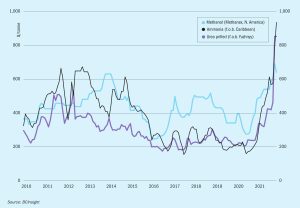
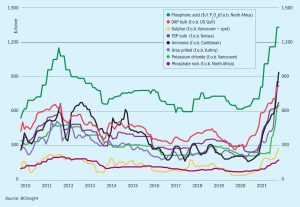
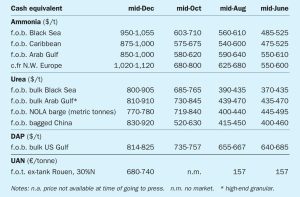
The ammonia market has entered 2022 looking very different to last year, with early January Pivdenny prices $875/t higher on a mid-point basis than they were at the start of 2021, and the likelihood of further gains ahead.
Market Insight courtesy of Argus Media
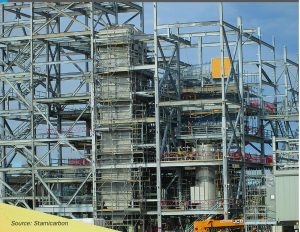
Stamicarbon offers advanced scrubbing technologies for fertilizer granulation plants and prilling towers. This article describes the technology and experience with the second operational MMV scrubber, which is installed at the Dakota Gasification Company’s (DGC) urea granulation plant, and highlights the successful pilot test with its JV scrubbing technology.
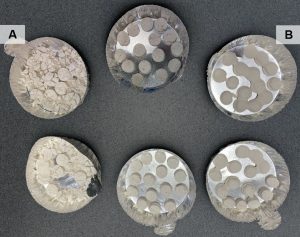
The consistency and integrity of fertilizer granules are key when producing a high-quality product for crop nutrition. Granulation aids help achieve this by increasing crush strength, improving size distribution and reducing recycling volumes during manufacturing. Christina Konecki of Arkema-ArrMaz outlines how their performance can be properly evaluated.

Market Insight courtesy of Argus Media

Conventional fertilizers can be transformed into enhanced efficiency fertilizers (EEFs) using coating agents and inhibitors. Greater use of EEFs, by preventing nutrient losses and avoiding excess nutrient supply, can help global agriculture become more sustainable, as Urvi Mathur of Neelam Aqua explains.