
People
Tony Will, the president and CEO of CF Industries, is the new chair of the International Fertilizer Association (IFA). He was elected in June alongside a number of other executive board members and board directors.

Tony Will, the president and CEO of CF Industries, is the new chair of the International Fertilizer Association (IFA). He was elected in June alongside a number of other executive board members and board directors.

Abdulrahman Al-Fageeh is the new CEO of SABIC. He is also the current chairman of SABIC Agri-Nutrients, the company’s fertilizer division.
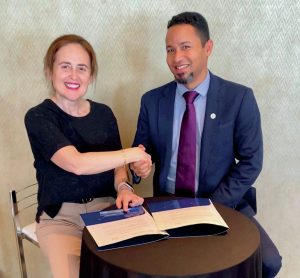
The Sustainable Fertilizer Academy (SFA) offers everyone within the fertilizer industry access to education on sustainability via a certified e-learning programme. More than 150 students have registered to date and over 40 alumni have graduated from the academy since it opened in September last year.
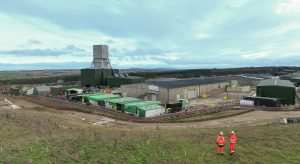
Anglo American recently unveiled the long-awaited strategy update for its large-scale Woodsmith mine project in the UK. Initial production of the company’s POLY4 polyhalite fertilizer is now scheduled to begin in 2027. The mine’s ultimate annual output has also been increased to 13 million tonnes.

Mining major Anglo American is to invest up to $4 billion to complete its Wood-smith mine project in the UK.
2022 was another very good year for Nutrien, the world’s largest crop nutrient company. The Canadian-headquartered fertilizer giant produces around 27 million tonnes of potash, nitrogen and phosphate products annually from operations and investments in 14 countries, distributing these to agricultural, industrial and feed customers across the globe. Its agriculture retail business, Nutrien Ag Solutions, also serves more than 500,000 farmers worldwide.

Micronutrient products are one the fertilizer industry’s fastest growing segments. In response, ICL, Koch Agronomic Services, Levity Crop Science, Omex and SQM have all strengthened their micronutrient portfolios.

We look ahead at fertilizer industry prospects for the next 12 months, including the key economic and agricultural drivers likely to shape the market during 2023.

This UreaKnowHow.com round table discusses the process upset condition of a high urea concentration in the ammonium carbamate recycle. It is commonly known that the urea formation reaction from ammonia and carbon dioxide via ammonium carbamate is an equilibrium reaction and that the urea conversion in any urea plant is limited. That is why downstream of the urea synthesis section the urea is separated from the ammonium carbamate in a recirculation section. Ammonium carbamate is dissociated into ammonia and carbon dioxide gases by means of low pressure and the addition of heat. The ammonia and carbon dioxide gases are dissolved in water and recycled back to the urea synthesis section. The urea content should be minimal as urea in the ammonium carbamate recycle leads to lower efficiencies. What are the causes and remedies for a high urea concentration in the ammonium carbamate recycle? n
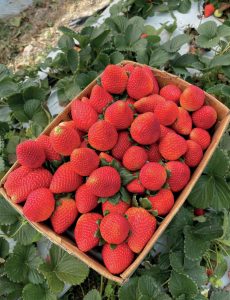
Small, soft fruits such as blueberries, raspberries and strawberries thrive on fertile, well-drained soils rich in organic matter. Their nutrient needs can vary widely according to yield expectations and soil characteristics.