Micronutrients – their unquestionable crop benefits
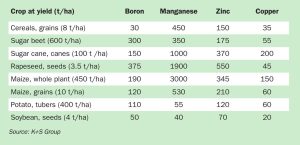
Dr Setareh Jamali Jaghdani and professor Jóska Gerendás of K+S Group outline how micronutrient management, by positively influencing plant physiology and development, helps maximise crop yields.
The production and use of nitrogen fertilizers are responsible for around five percent of global greenhouse gas (GHG) emissions. The fertilizer industry will need to drastically cut these emissions by 2050 as part of its contribution to the 1.5 °C global warming target. Yet around 48 percent of the global population rely on crops grown with nitrogen fertilizers. Guaranteeing food security, by continuing to supply affordable crop nutrients at scale, while transitioning to a low-carbon future, is therefore the collective challenge for the global fertilizer industry and world agriculture.
Sulphur plays an important role in crop nutrition. Indeed, sulphur is increasingly being recognised as the fourth major crop nutrient alongside N, P and K. However, a combination of intensive agricultural practices, increasing application of high-analysis fertilizers and tighter air quality regulations has led to increasing sulphur deficiency in soils. In this insight article, CRU’s Peter Harrisson looks at what’s driving sulphur deficiency and whether there’s a gap in the market for sulphur fertilizers.
RNZ Group is positioning itself as the most innovative and sustainable fertilizer producer in the UAE. In partnership with Shell, the company has been manufacturing sulphur-enhanced fertilizers using Thiogro technology since the end of 2022. Raza Soomar , RNZ’s managing director, provides an overview of the company and highlights recent business successes.
Fertilizers will always be fundamental to food production, but they will also have to be low emissions, environmentally friendly and support healthy soils. In this article, Dr Alexander Schmitt, Chief Marketing Officer, Anglo American Crop Nutrients, explains how polyhalite meets all three of these criteria – while also helping to increase the quantity and quality of food a farmer can produce.
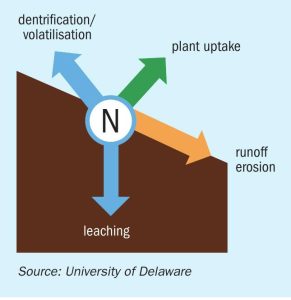
Addressing the ‘leaky’ nature of nitrogen fertilizers is a longstanding priority for growers, fertilizer producers and retailers alike. Dr Karl Wyant, Nutrien’s Director of Agronomy, examines the valuable role enhanced efficiency fertilizers (EEFs) can play in improving nitrogen use efficiency.
Biostimulants are emerging as mainstream products with major fertilizer producers – including Yara, Mosaic, Fertiberia and ICL – launching their own biostimulant lines and expanding production capabilities. Smaller innovative companies, meanwhile, such as Azotic and Fyteko, remain the mainstays of the sector and are continuing to being new products to market. Other players such as Den Nouden/GrowSolutions are targeting the expansion of organic fertilizers.
We look ahead at fertilizer industry prospects for the next 12 months, including the key economic and agricultural drivers likely to shape the market during 2024.
With phosphate supply concerns persisting as 2023 draws to a close, CRU’s Senior Analyst Logan Collins looks back at what’s been a dynamic year for the global phosphate market.
Liquid fertilizers are prized because of their flexibility – especially the freedom to blend nutrients together to create customised products for growers. Dr Karl Wyant, Nutrien’s Director of Agronomy, offers guidance on compatibility and safety, two key concerns when blending and handling liquid fertilizers.