
Codelco warns Chile’s copper output could stagnate
Copper production in Chile may stall at around 5.5 million t/a because of the growing challenges mining companies face, according to Maximo Pacheco, chairman of state-owned Codelco.


Copper production in Chile may stall at around 5.5 million t/a because of the growing challenges mining companies face, according to Maximo Pacheco, chairman of state-owned Codelco.

Egypt’s Mineral Resources and Mining Industries Authority (MRMIA) has signed a memorandum of understanding with China’s Asia-Potash International Investment (Guangzhou) Co., Ltd. The MoU is designed to strengthen joint cooperation in exploring and assessing phosphate ore reserves. The objective is to maximise the added value of this crucial resource.

The El Teniente mine, located in the O'Higgins region, suffered a collapse on 31 July. The collapse in the Andesita sector of the mine is understood to have been as a result of seismic activity that registered 4.2 on the Richter scale. It remains unknown whether the seismic activity was caused by the mining operations or natural activity, according to industry sources. Underground operations are to be halted for an unknown period of time while the open air sector, which represents around 10% of the total production, will remain open, according to industry participants.

Gunnison has started producing pure copper cathodes at its Johnson Camp Mine (JCM) in southeast Arizona, United States, from a solvent extraction-electrowinning (SX-EW) circuit and using leaching technology from Rio Tinto-owned Nuton. As well as giving Gunnison exclusive rights to deploy the proprietary process on run-of-mine ore, Nuton is a financial partner of the Phoenix-headquartered mine developer which has restarted copper production at past-producing JCM. The company’s next goal is to ramp-up to nameplate plant capacity of 25 million lbs/year (11,300 t/a) of finished copper.

BHP is now expecting first potash production from stage one of its Jansen mega project in Saskatchewan, Canada, in mid-2027.

The sale of Mosaic Potassio Mineração Ltda (MPM) to VL Mineração Ltda was announced on 13th August.

A model developed by ERCOSPLAN can help select the most efficient mining method for potash ore deposits.
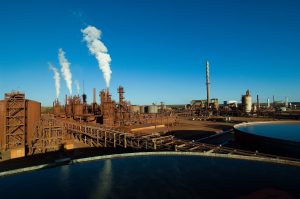
The progressive closure of smelter capacity in Australia poses potential problems for acid consumers across the country.
The Egyptian Mineral Resources and Mining Industries Authority has signed a memorandum of understanding (MoU) with El Sewedy Capital Investments to establish a partnership for the exploration, exploitation, and production of phosphate rock in the El-Sebaeya region of the Nile valley, with downstream beneficiation and a feasibility study for establishing a factory to produce phosphate fertilizers.
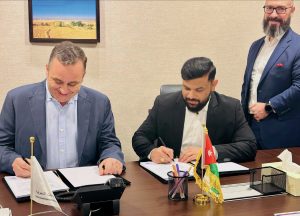
Metso has secured a contract with IDMI for a new phosphate beneficiation plant in Jordan.