Syngas News Roundup
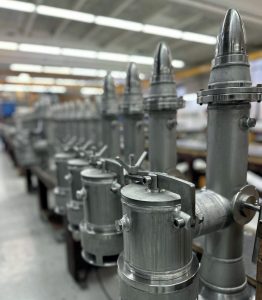
Pres-Vac Engineering's innovative high-velocity methanol valves offers shipbuilders unique options in creating more efficient and compliant dual-fuel systems.
Hanwha Corporation and INEOS Nitriles have announced their intention to collaborate in a study for a new low-carbon ammonia facility with carbon sequestration in the USA, with a capacity of more than 1 million tonnes per annum. The location of the plant is yet to be determined. The two companies have agreed heads of terms, under which Hanwha and INEOS will jointly explore the feasibility of a facility to meet the growing global demand for ammonia with low-carbon emissions. A final investment decision is planned for 2026 with planned commercial operation in 2030.
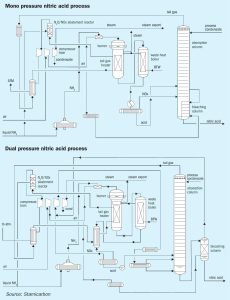
The need for immediate climate action and cuts in carbon emissions has never been more urgent, especially in a world where ecosystems are increasingly under threat. The production of green fertilizers offers a clear route to achieving these goals by decreasing the chemical industry’s reliance on fossil fuels. Stamicarbon’s Carmen Perez, Rolf Postma and Nikolay Ketov outline the company’s innovative and integrated approach to green fertilizer technology.
BASF, SABIC, and Linde have jointly inaugurated the world’s first demonstration plant for large-scale electrically heated steam cracking furnaces at BASF’s Verbund site in Ludwigshafen, following three years of development, engineering, and construction work. The three companies signed a joint agreement to develop and electrically heated steam cracking furnaces in March 2021.
Paradeep Phosphates Limited (PPL) and Mangalore Chemicals & Fertilizers Limited (MCFL) have agreed to merge.
Indian fertilizer producers Mangalore Chemicals & Fertilizers (MCFL) and Paradeep Phosphates (PPL) have announced that the companies intend to merge, allowing them to consolidate their operations, according to a company statement. The new merged company, to be called PPL, will have a total production capacity of 3.6 million t/a of fertilizers.
NextChem Tech, has signed a contract with Paul Wurth SA, a subsidiary of SMS group, and Norsk e-Fuel AS for a licensing and engineering design package relating to its NX CPO (catalytic partial oxidation) technology, which will be used in an industrial scale plant producing sustainable aviation fuel (SAF) from green hydrogen and biogenic CO2 in Mosjøen, Norway. NextChem’s NX CPO technology produces synthesis gas via a very fast controlled partial oxidation reaction. When applied to synthetic fuel production, it can improve carbon efficiency recovery yield. The first plant developed by Norsk e-Fuel will have a production capacity of 40,000 t/a of green fuel and will enter operation after 2026. Based on the initial design, two additional facilities with a capacity of around 80 000 t/a each are planned to be built by 2030. The fuels will current aviation emissions.
OCI Global says that it has reached an agreement for the sale of 100% of its interest in its large-scale nitrogen fertilizer subsidiary the Iowa Fertilizer Company LLC, located in Wever, Iowa, to Koch Ag & Energy Solutions for $3.6 billion. Completion of the transaction remains subject to US anti-trust approval and other customary closing conditions. The transaction is expected to close in 2024. Morgan Stanley & Co. International plc is serving as financial advisor to OCI on the transaction. IFCO produced 1.2 million t/a of urea ammonium nitrate (UAN) in 2021 and 700,000 t/a of anhydrous ammonia, as well as 700,000 t/a of diesel exhaust fluid (DEF).
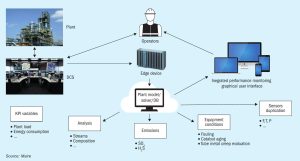
Maire Group subsidiary MyRechemical has been awarded a feasibility study for the integration of its proprietary waste-tosyngas technology in a large-scale conversion plant that would transform solid municipal waste into 120,000 t/a of sustainable aviation fuel (SAF). MyRechemical would provide the gasification unit to transform solid waste streams into synthesis gas, which would then be converted into low carbon ethanol and then to SAF.
Granulation technology generates a premium urea end-product in large volumes capable of withstanding lengthy storage and extreme shipping conditions. Prilling technology, meanwhile, given its typically lower investment cost, can be an attractive option for smaller-scale urea producers supplying local markets. Stamicarbon’s Dr Wilfried Dirkx, Ahmed Shams and Branislav Manic explore the technology options for urea finishing.