Morocco’s new acid capacity
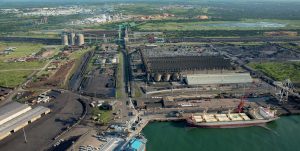
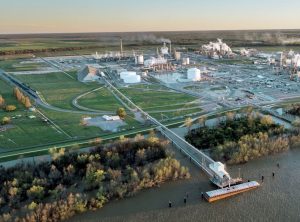
Morocco’s OCP is continuing to expand its phosphate fertilizer production capacity. This includes the construction of new sulphur-burning acid capacity to support phosphate production and provide carbon-free power.
Qatar construction services company UCC Holding has signed a memorandum of understanding with the Kazakh Ministry of Energy for a gas treatment plant at the Kashagan field with a capacity of 6 billion cubic meters as part of the Phase 2B expansion. The memorandum was signed by Minister of Energy Almassadam Satkaliyev and Mohamed Moutaz Al Khayyat, chairman of UCC Holding.
In January, Kazakh uranium producer Kazatomprom warned of potential adjustments to its 2024 uranium production due to challenges with sulphuric acid availability and construction delays at new uranium mining operations. In a statement the company said that its projected uranium output for 2024 will be between 21,000 t/a and 22,500 t/d U3 O8 , around 20% lower than the amount it had been expecting to be able to mine. Kazatomprom’s uranium output was 21,100 t/a U3O8 in 2023, down 1% on 2022 figures, with output flat during 4Q 2023. While it said it had sufficient inventory in stock to cover contracted deliveries in 2024, there could be problems for 2025 deliveries.
Mark Brouwer and Jo Eijkenboom of ureaknowhow.com examine the major shifts in global urea production. They also discuss the future of the urea industry and, in particular, how the sector is being affected by the increasing focus on low-carbon ammonia production.
Freeport Indonesia has inaugurated the $250 million expansion at its PT Smelting copper smelter in Gresik, East Java, in a ceremony attended by Indonesian president Joko Widodo. Smelting, a joint venture between Freeport McMoRan and Mitsubishi Materials, has increased copper concentrate processing capacity to 1.3 million t/a, up from the previous figure of 1.0 million t/a, with copper cathode production of 300,000 t/a.
Granulation technology generates a premium urea end-product in large volumes capable of withstanding lengthy storage and extreme shipping conditions. Prilling technology, meanwhile, given its typically lower investment cost, can be an attractive option for smaller-scale urea producers supplying local markets. Stamicarbon’s Dr Wilfried Dirkx, Ahmed Shams and Branislav Manic explore the technology options for urea finishing.
More than 700 delegates from 300 companies and 55 countries gathered at the EPIC SANA Lisboa Hotel, Lisbon, Portugal, 17-19 October 2023, for the Argus Fertilizer Europe 2023 conference.
BHP has approved an investment of $4.9 billion (CAD 6.4 billion) in stage two of its Jansen potash project (Jansen Stage 2) in Saskatchewan, Canada.
Fertilizer International presents a global round-up of current potash projects.
One of the things that produced a lot of worried news headlines over the past couple of years is whether the energy transition is likely to lead to a shortage of sulphur as we switch away from fossil fuels on a large scale. As we’ve discussed in this magazine, those fears are overblown, certainly in the medium term future. Peter Harrison of CRU tackled the issue in his sulphur markets presentation at the recent Sulphur and Sulphuric Acid conference in New Orleans, and while he did admit to some reduction in sulphur supply from oil in the 2030s and increasing into the 2040s, increased sulphur recovered from sour gas is likely to more than make up for that at least until the 2040s. But one of the things that did strike me about his presentation is the extent to which the energy transition is indeed already changing the way that the sulphur market works, and will increasingly do so over the next few years.