Fertilizer Industry News Roundup
Illinois-headquartered CF Industries has made a long-term commitment to low-carbon ammonia production and net-zero emissions.

Illinois-headquartered CF Industries has made a long-term commitment to low-carbon ammonia production and net-zero emissions.
The UK Agricultural Industries Confederation has announced that Sam Bell , UK Commercial Director at CF Industries and Nick Major , Corporate Affairs Director at ForFarmers have taken over as chairs for the AIC’s Fertiliser Executive Committee and Feed Executive Committee, respectively.
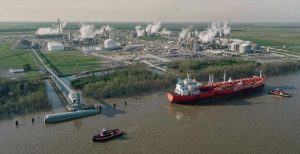
The US Environmental Protection Agency (EPA) and the US Department of Agriculture (USDA) have announced the ‘Next Gen Fertilizer Challenge’, a joint EPA-USDA partnership and competition to advance agricultural sustainability in the United States. The competition includes two challenges that seek proposals for new and existing fertilizer technologies to maintain or improve crop yields while reducing the impacts of fertilizers on the environment.
We report on how the fertilizer industry and individual companies are working to mitigate the impacts of the Covid-19 pandemic.
A Stamicarbon urea plant attempts to start up after a scheduled turnaround. Due to maintenance issues, it is necessary to shut down and block in the synthesis section several times. Although licensor’s procedures have been followed, several signs of active corrosion are noticed in the liner of the reactor. What could the cause be for this unexpected behaviour? Can sharing experiences from colleagues from other urea plants provide valuable support to find the root cause or even provide new insights into possible new causes? One observation is that the typical heating up rate of a liner in a reactor is much higher than recommended (refer to diagram). The condensation heat of steam heats up the liner much faster than the carbon steel pressure bearing wall. This creates stress on the liner and affects the lifetime of the liner. Another observation is a temperature rise in the reactor during a blocking in situation. This can be a cause for loss of oxygen required for passivation, resulting in higher corrosion rates.

Nutrien is the world’s largest crop nutrient company with a market capitalisation of almost $20 billion (Figure 1). This fertilizer industry giant produces and distributes over 25 million tonnes of potash, nitrogen and phosphate products for agricultural, industrial and feed customers globally. The company’s agriculture retail business also serves over 500,000 growers worldwide through a network of international outlets.

The impact of coronavirus on both supply and demand continues to provide considerable uncertainty to the market. With much of Hubei province on lockdown, and a corresponding reduction in ammonia demand for DAP production, Chinese imports appear to be down, pushing more ammonia onto the international market and creating generally bearish sentiment.

The end of winter each year is always a good time to reflect on the state of the fertilizer industry. This year was no exception with the usual flurry of fourth-quarter and full-year results for 2019 emerging mid-February. Less of a flurry, actually, more of an avalanche.
Charlotte Hebebrand, director general of the International Fertilizer Association (IFA), is to step down at the beginning of May, after more than seven years in the role.