Nitrogen+Syngas Index 2025
A complete list of all articles and news items appearing in Nitrogen+Syngas magazine during 2025.

A complete list of all articles and news items appearing in Nitrogen+Syngas magazine during 2025.
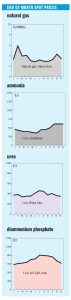
Ammonia values in the Middle East, Far East and Southeast Asia edged higher at the start of January, while other major benchmarks were largely unchanged amid a subdued market. Conditions at the start of the year mirror late2025, with prices supported by persistent supply tightness from the continued absence of Ma’aden’s MPC facility, which removes an estimated 300– 400,000 tonnes from the market. The unit is expected to return in midtolate January.
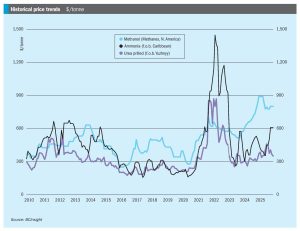
• Ammonia prices are expected to ease through January as new supply comes online. Woodside’s Beaumont facility produced its first ammonia at the end of December and is poised to start commercial production in early 2026, and there is also new supply from Gulf Coast Ammonia (GCA). In Saudi Arabia, the expectation is that both Ma’aden and Sabic will return to the market mid-to-late January.
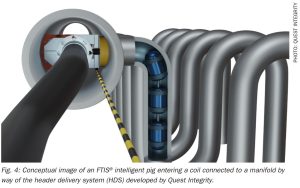
The convection section of a syngas reformer is vulnerable to creep, corrosion, erosion, fretting and fouling which can cause deformation, local metal loss and failures that risk plant shutdown. Inspection access is limited, but solutions are available. Quest Integrity discusses life management of the reformer convection section to reduce unplanned outages.

The voluntary carbon market (VCM) is maturing rapidly, and a succession of governance, standards and policy initiatives has been launched since 2020 to tackle weaknesses in integrity and scalability which have constrained uptake and undermined confidence.
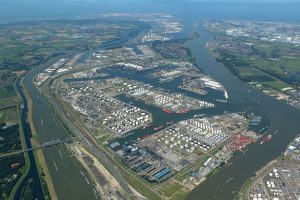
Europe is likely to become an increasing ammonia importer over the coming years as low global ammonia prices and high European gas prices squeeze producer margins, but CBAM remains a wild card.

Gas consumption is rebounding in Europe as prices stabilise at lower levels, while the LNG market continues to see large capacity additions.
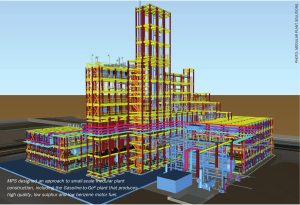
Modular Plant Solutions (MPS) introduces the MeOH-To-Go® plant, a new approach to methanol production through small-scale, modularised plant design.
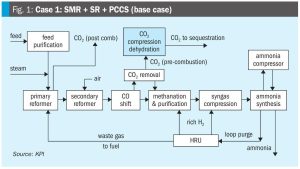
KPI evaluates deep decarbonisation pathways for a new build ammonia plant of 3,500 t/d on the US Gulf Coast. Eight technology configurations are compared with results providing a framework for technology selection, balancing emissions reduction, process integration, and indicative economics.
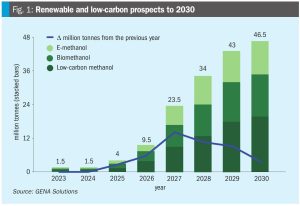
Global demand for methanol is set to increase fivefold by 2050, driven by decarbonisation in shipping and other hard-to-abate sectors. Air Products Membrane Solutions discusses how membrane technology offers a proven, scalable solution to improve efficiency, reduce emissions, and enable compliance across both traditional and low-carbon methanol pathways.