
Leave no resource unused
The International Fertilizer Association (IFA) released a new report on phosphogypsum (PG) in May, ahead of its Annual Conference in Monaco.

The International Fertilizer Association (IFA) released a new report on phosphogypsum (PG) in May, ahead of its Annual Conference in Monaco.
I am writing this freshly returned from the Sulphur Institute’s annual Sulphur World Symposium in Florence (for more on that see pages 24-25), where one of the topics causing some excitement was the anticipated commissioning of a demonstration plant for Travertine Technologies’ new Travertine Process. The plant is due to be commissioned at the Sabin Metals site near Rochester, New York in mid-2025 at a cost of $10.7 million. Capacity is put at “hundreds” of tonnes per year of gypsum processed, and removing “tens” of tonnes per year of CO 2 from the atmosphere.
Wi th future demand for both low carbon methanol and ammonia depending to a considerable extent on their take-up as low carbon shipping fuels, recent developments in the EU and IMO may help accelerate that process, as detailed in CRU’s most recent Low Carbon Hydrogen and Ammonia Outlook.
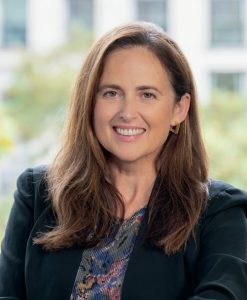
Alzbeta Klein, CEO and Director General of the International Fertilizer Association (IFA), sets the scene for IFA’s Annual Conference in Monaco, 12-14 May.

P r esident Trump’s flurry of activity in his first month of office has not only upended the global political order that has existed, more or less, since the US rearranged it to its satisfaction in 1945, but has also had a seismic impact on world trade. How the various strands of US policy will play out remains highly uncertain, but some clear trends are beginning to emerge.
The past few weeks have seen sulphur prices spiking after a steady rise since 3Q 2024. At time of writing, delivered prices to a variety of locations were around $280/t c.fr, their highest level since mid-2022 when the price of commodities of all kinds jumped in the wake of the Russian invasion of Ukraine and subsequent sanctions. Steady buying from Indonesia and China, the two largest importers of sulphur, appears to have supported the market, in China’s case mainly for phosphate production as well as a variety of industrial processes, and in Indonesia’s case to feed the high pressure acid leach (HPAL) plants that are producing nickel for the battery and stainless steel industries. Although Chinese buying has dropped off slightly since Lunar New Year, and demand has also slackened in India, Indonesia’s appetite continues unabated, having tripled its nickel production since the start of the decade to become the world’s largest producer, representing 60% of global supply in 2024.

Simon Inglethorpe, editor of Fertilizer International, shares his thoughts on the hurdles facing the fertilizer industry and how best to vault these.

On February 27th, in a speech to the Bundestag, Germany’s chancellor Olaf Scholz described the events then unfolding as a “zeitenwende” – a historical turning point. He was speaking of German foreign and security policy, but it seems likely that Russia’s February 24th invasion of Ukraine may end up marking a break with the past in many different ways. Last issue’s Editorial was written when Russia’s ‘special military operation’ was still only a few days old, and the situation was still very fluid. Two months on, and for all of the uncertainties remaining, some glimpses of the way that things are changing are becoming clearer.