Category: Innovation

Digital solutions bringing better performance

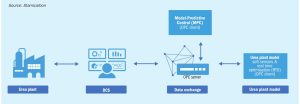
By harnessing the power of real-time data and exploiting the opportunities provided by digital solutions plant owners can achieve greater plant efficiency and reliability. In this article Stamicarbon shows the benefits of the Stami Digital Plant Optimiser for urea plants, OnPoint Digital Solutions provides a case study on optimising primary reformer heater operations using Smart Combustion™ , TOYO provides an update on its digital transformation service DX-PLANT® and thyssenkrupp Industrial Solutions provides examples of how digital solutions can be used to improve plant operation.
Hydrogen for fuel cell vehicles and stationary power

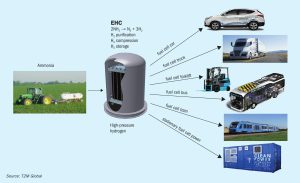
As the world focuses on clean fuels for the 21st century, there is an emerging opportunity to use ammonia as a source of hydrogen. Hydrogen fuel cells are expected to play a significant role as part of a clean energy portfolio. T2M Global and its development partner, SAFCell, are collaborating to develop a modular system to produce hydrogen from ammonia using a novel solid state separation system that does not require pressure or solvents. P. Patel of T2M Global, C. Chisholm of SAFCell and V. Pattabathula of Incitec Pivot explain the challenges, the opportunities and the current status of this new technology.

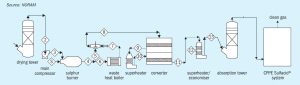
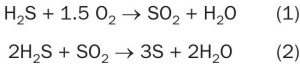
Better monitoring and control in Claus plants

Applied Analytics discusses potential improvements made possible with data and analytical measurements fed into improved mathematical models to produce a more proactive approach to control and better performance of sulphur recovery units, AMETEK Process Instruments explains the benefits of feed forward control, SICK reports on reliable continuous emission monitoring systems and WIKA introduces a new purge-free system to measure refractory temperature in the Claus reaction furnace.

Influence of flame velocity on secondary reformer design

The different flame velocities of reactants in the combustion space of a secondary reformer have a significant impact on the gas inlet temperature of the catalyst and the methane conversion in front of the catalyst. Based on this fact, Hanno Tautz Engineering introduces an alternative secondary reformer design. Compared with the state-of-the-art-technology, the alternative design shows advantages for hydrogen production efficiency and product capacity.