Fertilizer International 531 Mar-Apr 2026
19 March 2026
The strategic transformation of phosphogypsum from a waste to a resource
PHOSPHATES & POTASH INNOVATION
The strategic transformation of phosphogypsum from a waste to a resource
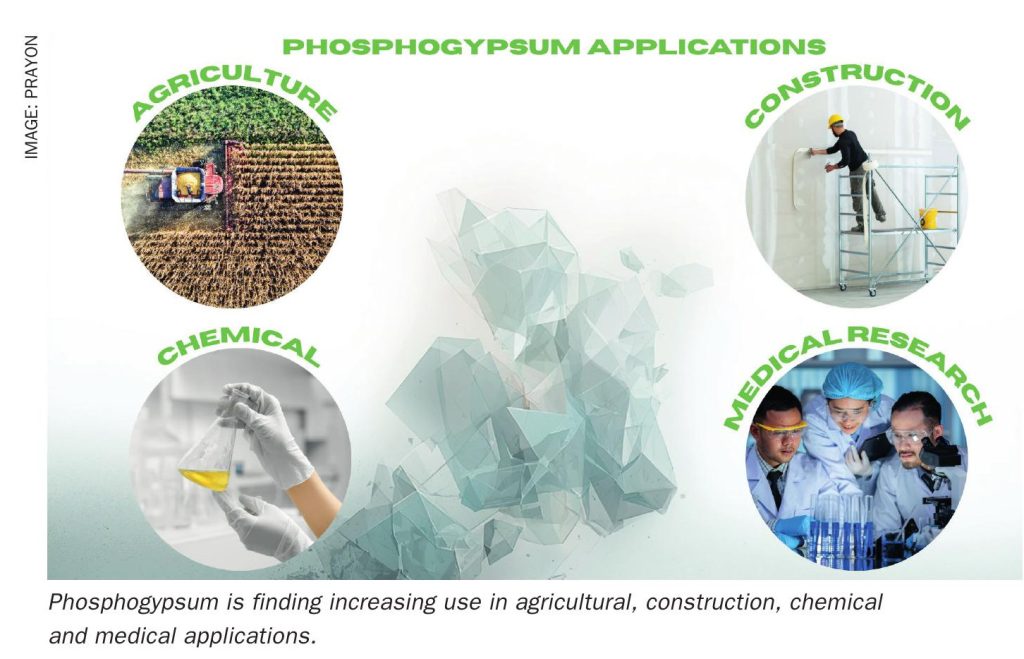
In a strategic shift for the fertilizer industry, phosphogypsum is being transformed from a waste burden into a valuable construction grade-material. Tibaut Theys explains how Prayon Technologies is developing safe, high-value and circular solutions that are allowing increasingly widespread reuse of this voluminous byproduct.
Background
Phosphogypsum (PG) is one of the fertilizer industry’s main byproducts. It is generated during phosphoric acid production by the wet process route at a rate of more than four tonnes for every tonne of P2O5 manufactured.
For decades, phosphogypsum was seen mainly as a waste burden and generally stored in large stacks – due to concerns over its environmental impact, natural radioactivity, and the lack of clear regulatory frameworks for reuse.
Today, this perception is changing rapidly (Fertilizer International 527, p4). Advances in process technology, combined with higher sustainability expectations and new circular business models, are creating new opportunities for the safe and valuable reuse of phosphogypsum.
Prayon is also playing its role by helping to transform PG into a high-quality material fit for construction applications. This is achieved by controlling the main impurities that limit its use: radioactivity, heavy metals, residual phosphorus, and fluorine.
A new perspective: from waste to circular resource
The quality of phosphogypsum is the key determinant of its potential for industrial reuse. Although PG is essentially gypsum, its composition varies depending on the original phosphate ore used and the configuration of the production process. When it comes to reuse, residual P2O5 , soluble fluorine, heavy metals, organic compounds, and moisture content all influence performance and compliance. The presence of natural radionuclides (mainly radium-226) is also critical, as their levels will dictate regulatory acceptance.
Yet, if generated at high purity, phosphogypsum can be suitable for demanding and high specification construction applications. Gypsum used in plasterboards, plasters, and alpha-hemihydrate products requires low levels of phosphorus, fluorine, and heavy metals. Its radioactivity levels must also comply with European frameworks for Naturally Occurring Radioactive Material (NORM), Basic Safety Standards (BSS) and international guidelines.
Fortunately, with proper process design, phosphogypsum can match or surpass the performance of natural gypsum in construction uses, enabling the production of building materials with a lower carbon footprint.
Prayon’s technologies are designed to produce cleaner gypsum that meets strict industrial and legislative requirements. They notably include:
• Advanced double-crystallisation routes – the Central Prayon Process (CPP) or the DA-HF process
• Hemihydrate (HH) processes
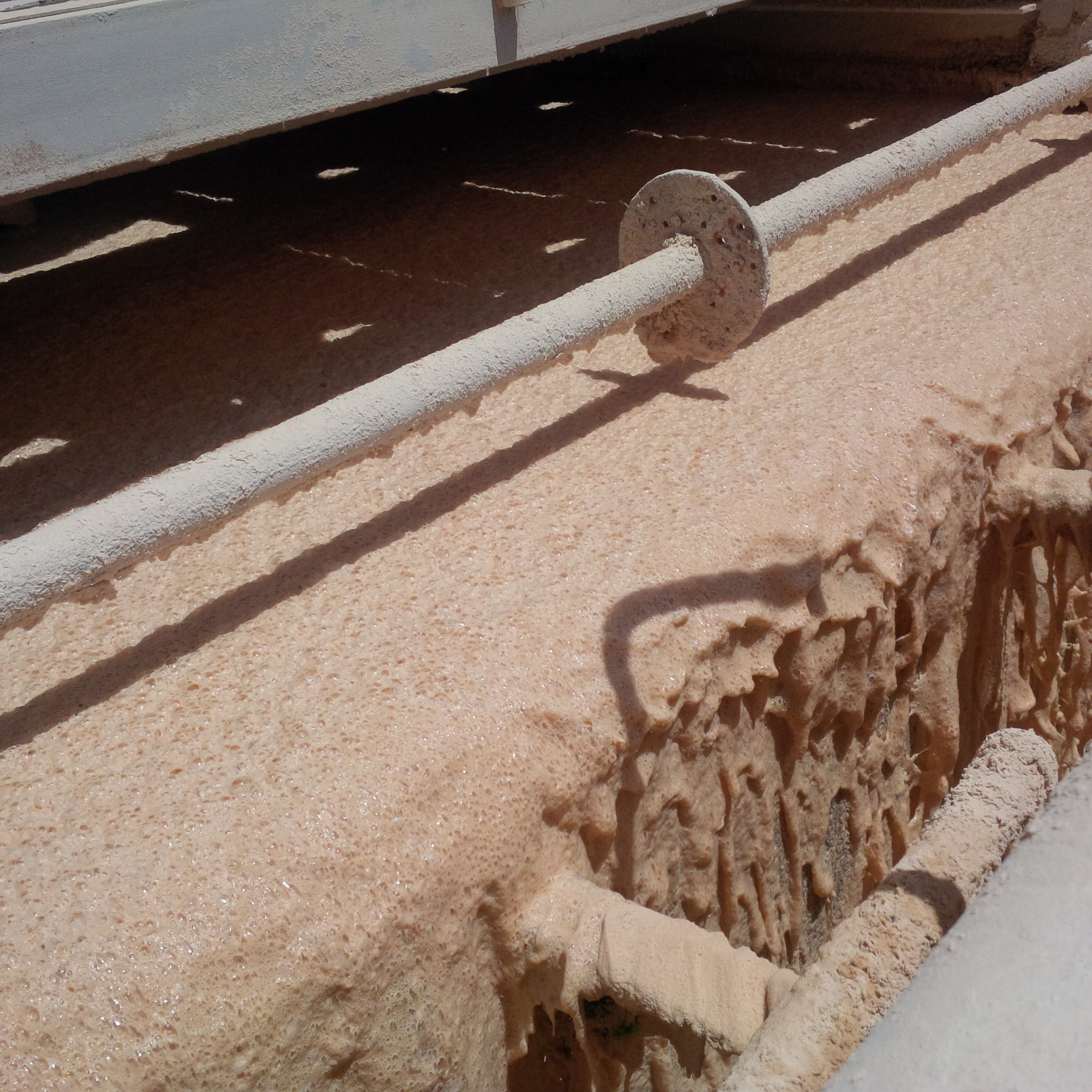
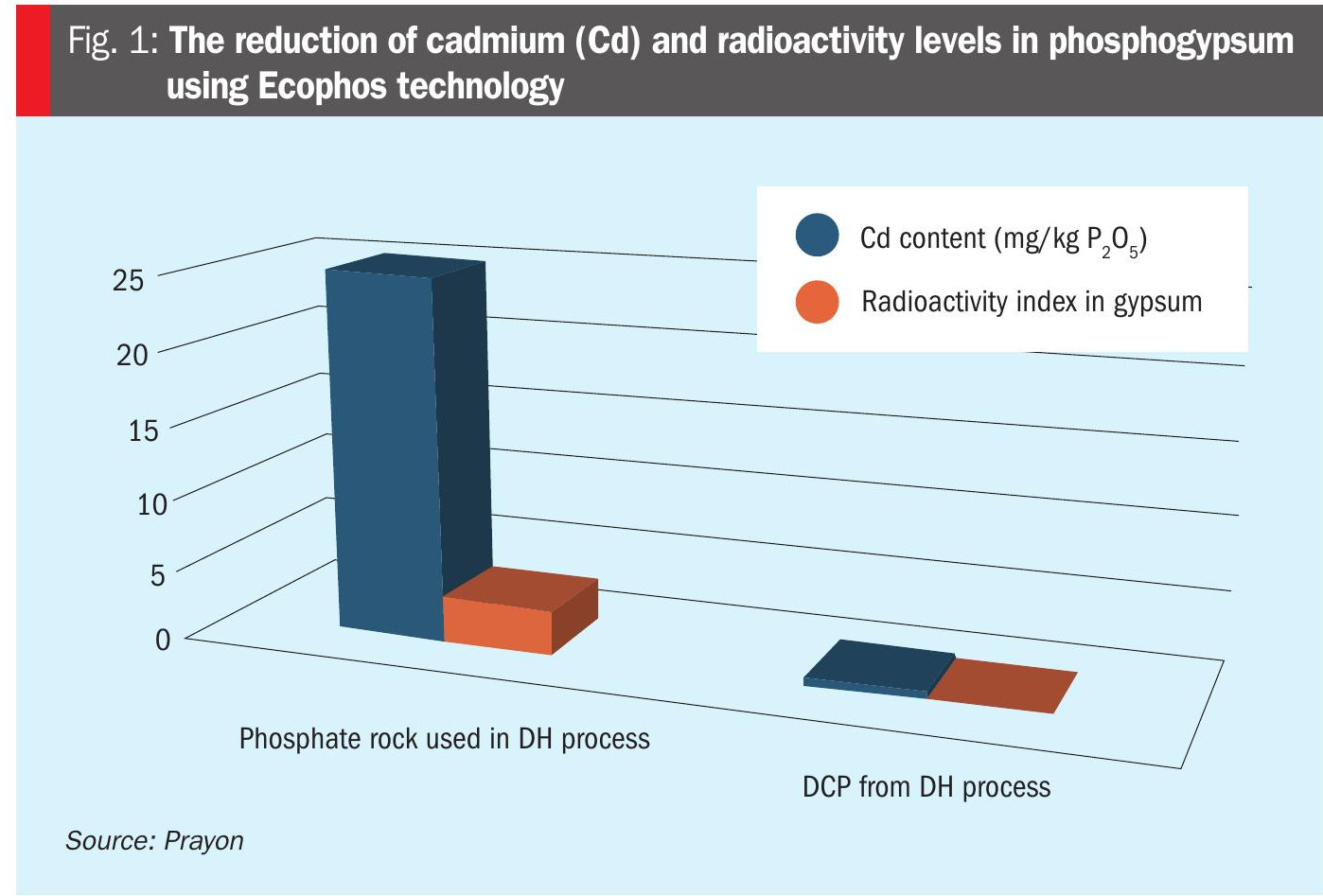
• Ecophos technology (Figure 1) for rocks with higher natural radioactivity.
This suite of technologies – by significantly reducing impurities, stabilising materials and providing consistent quality levels – offers a broad pathway to the valorisation of phosphogypsum. The highly pure PG obtained becomes suitable for high specification construction end-uses such as stucco plaster, gypsum board and clinker production.
Construction usage
Valuably, the use of phosphogypsum in plaster block can contribute to energy savings and cut CO2 emissions, due to the lower energy demand of gypsum block versus cement block production. Looking beyond conventional gypsum plasters and boards, high-purity PG also supports the development of prefabricated construction components and lightweight building systems, end-uses that combine structural efficiency with environmental benefits.
Phosphogypsum also plays a well-established role in cement manufacturing, where it is used as a setting retarder that controls clinker hydration. Gypsum is typically added as a component to cement (3-5% proportion) to prevent flash setting and improves workability by regulating reactions involving tricalcium aluminate. Cleaner PG enhances the stability and predictability of this process.
Additionally, new co-processing routes now allow gypsum to simultaneously serve as both a calcium source for clinker production and as a sulphur source for sulphuric acid manufacturing. This integrated approach has dual benefits as it:
• Reduces CO2 emissions by avoiding the decomposition of carbonate rocks
• Extends sulphur supply options in a world where fossil fuel derived sulphur sources are declining.
Road base construction
Roadway construction represents another promising valorisation pathway. Phosphogypsum can be stabilised with cement or lime and used to create road base layers. Stabilised PG offers strong mechanical performance, good water resistance, and efficiently immobilises any residual fluorine and phosphorus.
Pilot projects carried out in countries such as Morocco, China, India, USA and Russia show that PG-stabilised road bases can match or improve on the performance of traditional materials, when produced under properly engineered conditions. Road construction is potentially a large-scale application for PG where significant volumes of materials are available and regulatory acceptance is achievable under controlled conditions.
Changing regulations
The potential for reusing high-quality phosphogypsum has closely followed the changing regulatory environment. While some jurisdictions have historically imposed strict restrictions on PG use because of its natural radioactivity, new guidance from bodies such as the International Atomic Energy Association (IAEA) has promoted a more nuanced, risk-based approach.
In Safety Reports Series No 78, for example, the IAEA now recommends the controlled use of phosphogypsum in construction, roads, and agricultural applications. Similarly, the European Basic Safety Standards (BSS), following the same logic, promotes proportionality and traceability in PG use rather than blanket bans. Consequently, countries such as Brazil, China, India, and European Union member states have already implemented frameworks that allow phosphogypsum to be classified as a secondary raw material or co-product, when quality criteria are met.
Circularity – from waste to resource
The circular economy dimension of phosphogypsum reuse goes beyond construction to encompass a broad range of end-use applications.
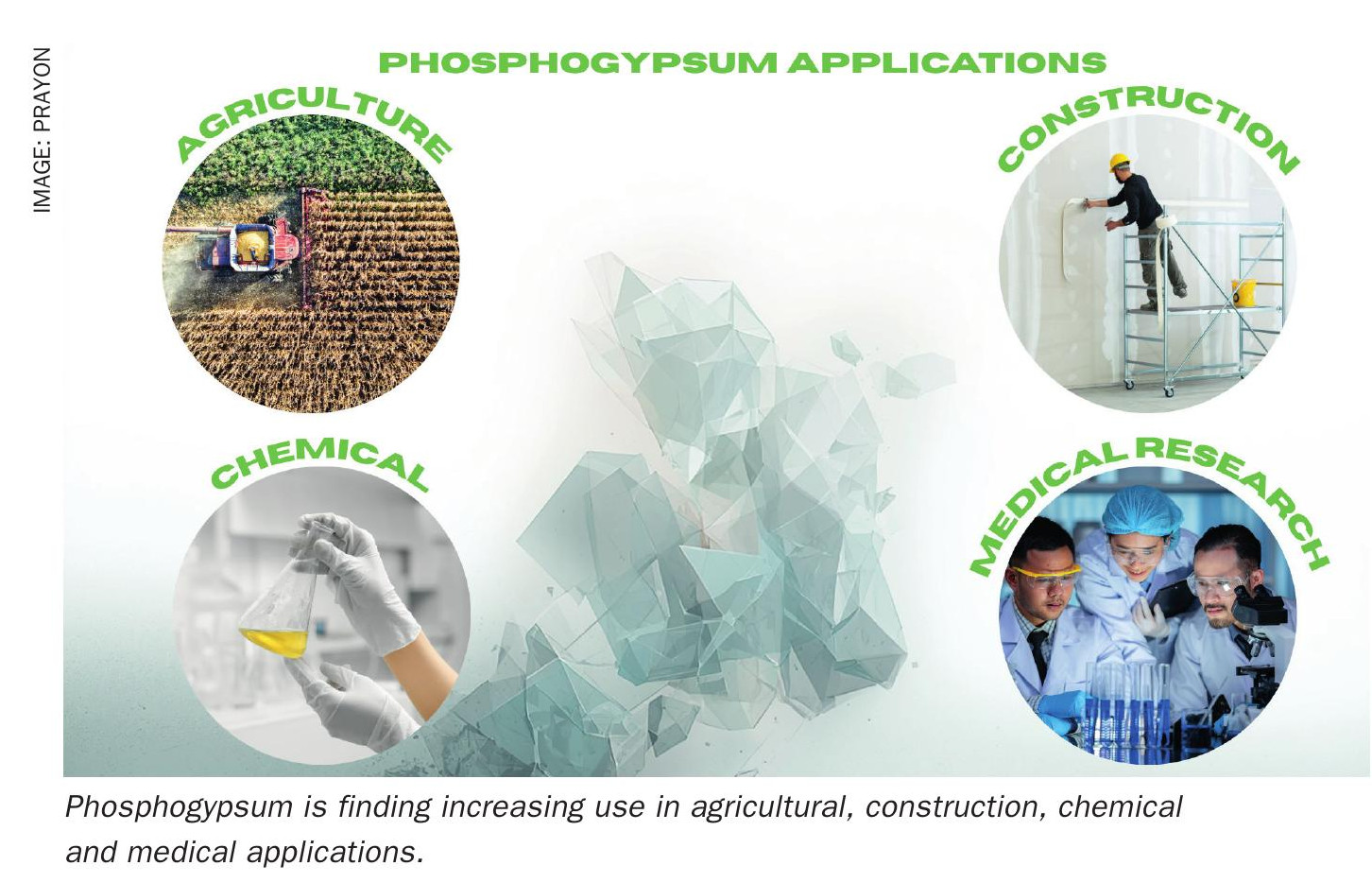
Cleaner PG supports agricultural improvements, for example, by enhancing soil structure, correcting soil acidity at depth, and improving crop root development, especially in tropical or saline soils. It can also be used as an effective mine backfilling material due to its ability to form stable, low-permeability matrices that immobilise contaminants.
Additional opportunities for phosphogypsum include use as a mineral filler (in polymers and technical materials) and rare earth element (REE) recovery. REEs can concentrate in PG, with a significant proportion of the original content of the phosphate rock ending up in the gypsum fraction during processing.
Collectively, all these valorisation pathways underline the versatility of phosphogypsum when its quality is properly controlled.
The Prayon approach
Prayon is supporting phosphogypsum valorisation in a number of ways. It is helping phosphate producers by conducting detailed characterisation studies, for example, as well as supporting the industry’s dialogue with regulators, and organising technical visits to industrial plants where PG valorisation is already being implemented at scale.
Prayon offers different ways to improve phosphogypsum quality. In practice, the company applies a targeted and flexible strategy that selects the most suitable technology according to the end-use and the final quality required by the customer.
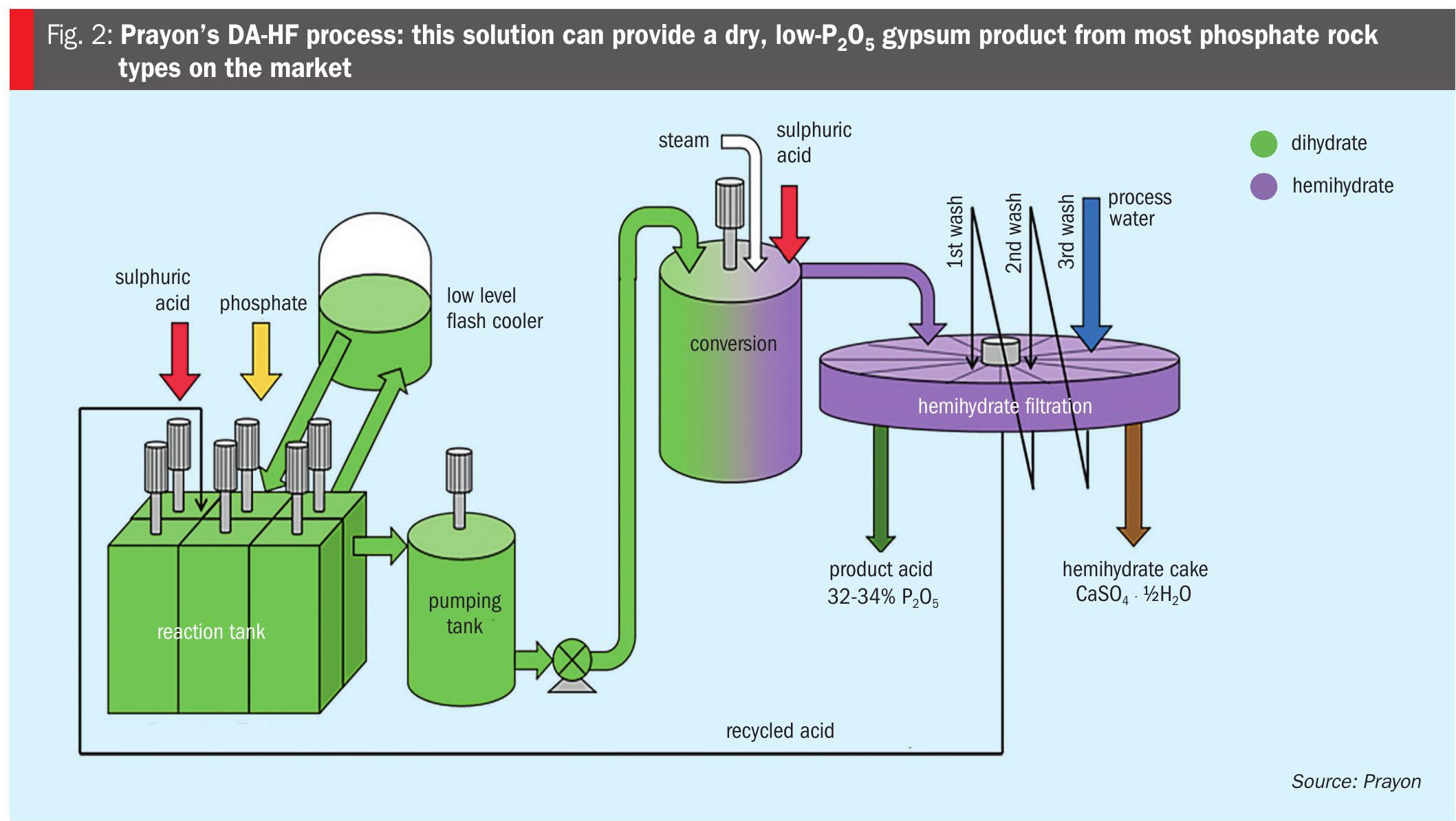
When the objective is to use PG exclusively as a set retarder in the cement industry, we recommend double-crystallization processes such as the Prayon Central Prayon Process (CPP) or the DA-HF process (Figure 2). These technologies offer two major advantages:
• First, they produce a self-drying gypsum product that reduces or eliminates the need for energy intensive drying operations.
• Second, they can operate efficiently on a wide variety of phosphate rocks – including lower grade and more economical raw materials – thereby providing both technical robustness and cost competitiveness.
Prayon recommends the deployment of a dedicated cadmium reduction technology – applied directly during rock beneficiation – in cases where heavy metals such as cadmium are a concern. Using a specific leaching step conducted under controlled conditions, we can consistently reduce cadmium content below the commonly required limit of 20 mg per kg of P2O5 , allowing producers to meet both regulatory limits and commercial expectations.
Two approaches are available when radioactivity becomes the limiting factor in PG use:
• Either specific radioactivity reduction treatments are applied directly to the phosphogypsum, technologies that are currently being strengthened and industrialised.
• Or we recommend switching to one of our low-grade rock beneficiation technologies, such as the GetMoreP or Ecophos processes.
Both routes generate a phosphogypsum coproduct with very low cadmium levels but, more importantly, with a level of natural radioactivity significantly below industrial thresholds. This enables the direct use of PG in applications such as clinker production or plasters, without requiring additional treatment steps.
By offering all these different valorisation pathways, Prayon ensures that each customer can produce gypsum to a quality fully aligned with its market expectations, the regulatory environment, and raw material constraints.
Conclusion
The transformation of phosphogypsum from a waste to a resource represents not just a technical achievement but also a strategic shift for the fertilizer industry. By combining advanced process technologies, regulatory alignment, and industrial collaboration, Prayon helps turn PG from an environmental liability into a material that supports sustainable construction, efficient resource use, and circular value creation.
This strategic shift enhances the long-term viability of fertilizer production, improves ESG (environmental, social, and governance) performance, and opens new economic opportunities for producers. With the right technological solutions and regulatory frameworks, phosphogypsum becomes not a problem to manage but a resource to develop, one that contributes to safer, more sustainable, and more competitive industrial systems.
About the author
Tibaut Theys is General manager of Prayon Technologies.
CRU Phosphates+Potash Expoconference 2026
Tibaut Theys will be presenting on ‘Transforming Phosphogypsum into a Valuable Resource for the Construction Industry’ at the conference in Paris on Wednesday 15 April at 11:30– 12:00. Register now at: events.crugroup.com/phosphates/register