Fertilizer International 531 Mar-Apr 2026
19 March 2026
Industry trends in sulphur-enhanced fertilizers
The increasing prevalence of sulphur-deficient soils, combined with pressure to improve nutrient efficiency, is driving interest in sulphur-enhanced fertilizers. The integration of elemental sulphur directly into urea offers a practical pathway to addressing these challenges at scale. Kent Martin and Rafael Garcia-Martinez outline how elemental sulphur is being used within the fertilizer industry to improve both agronomic performance and logistical efficiency.
Sustainable intensification driving market change
The fertilizer industry is undergoing significant transformation as agriculture intensifies its focus on sustainability and resource efficiency. Increasing adoption of nutrient stewardship principles and precision agriculture is reshaping fertilizer selection and management across global farming systems.
At the same time, a more competitive and increasingly consolidated market is pushing leading producers to diversify. A broad product portfolio, once a strategic advantage, has now become a fundamental requirement for long term relevance.
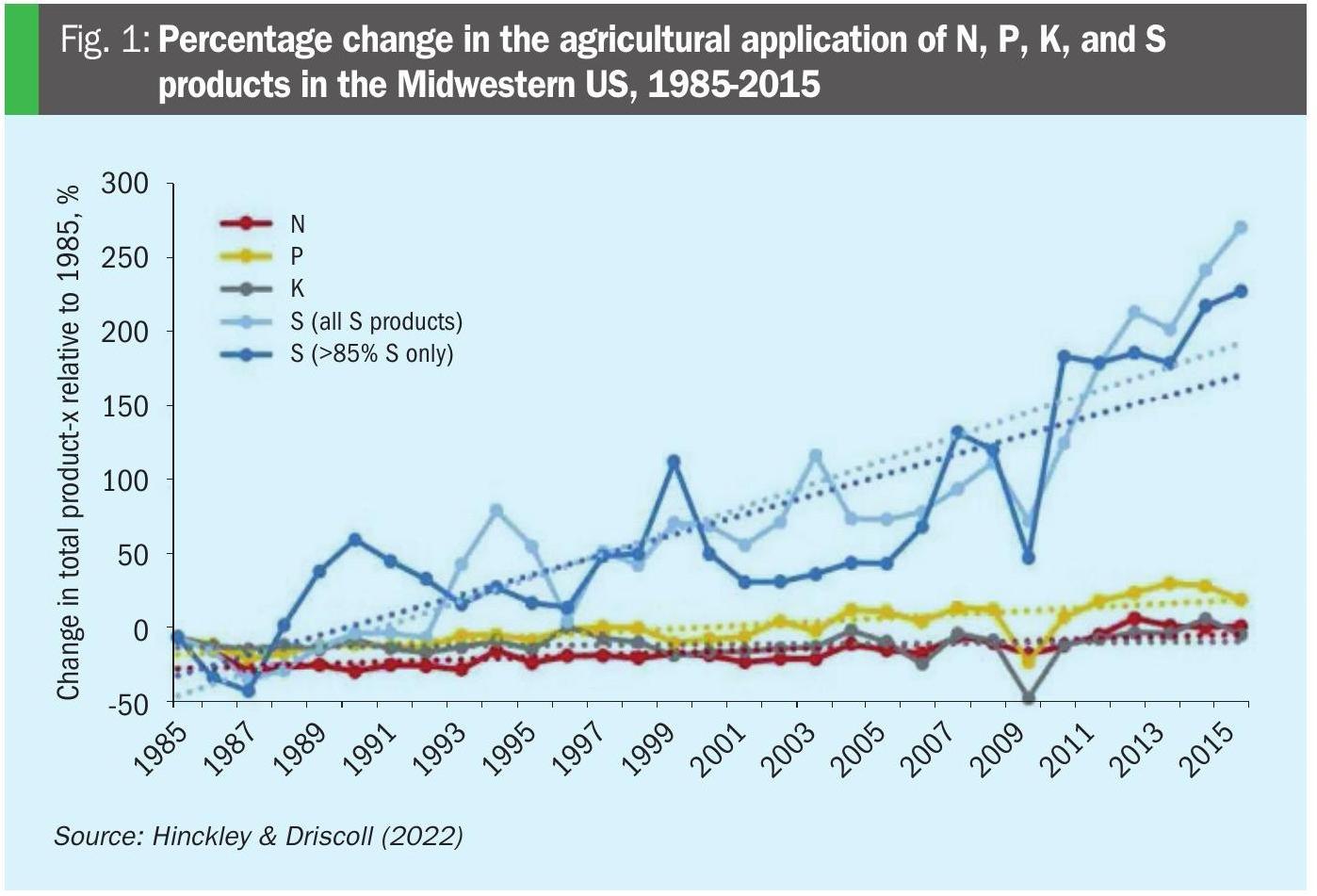
Sulphur has experienced drastic changes in recent years – a consequence of its continued recognition as the ‘fourth major crop nutrient’. In the US Midwest, for example, a rapid increase in sulphur fertilizer application, compared to nitrogen, phosphorus and potassium, has been observed1 (Figure 1).
Most recently, sulphur demand has also increased for use in industrial processes to produce batteries and other high value products. This has placed additional pressure on sulphur producers to increase the efficiency of fertilizer products to maximise the value and agronomic benefits of applied sulphur.
Reduced atmospheric deposition driving widespread deficiency
Strict fuel desulphurisation regulations have successfully reduced industrial sulphur emissions and improved air quality. These successful environmental policies have, however, also significantly lowered sulphur deposition onto agricultural soils. As a result, many cropping systems that historically relied on atmospheric inputs must now receive sulphur directly through fertilizers.
Despite the introduction of numerous sulphur-containing fertilizer products, a global imbalance remains. In 2015, The Sulphur Institute (TSI) estimated that approximately 10 million tonnes more sulphur was removed from soils annually than was replenished. To reassess the current situation, the International Fertilizer Association (IFA) together with TSI and a selected group of academic and industrial partners are conducting an updated global assessment of the crop sulphur balance. This is compiling data across major crop systems worldwide – information that will be key to farmers, industry, investors and the public in general.
Sulphur as a critical plant macronutrient
Sulphur plays a vital role in crop development. It is an essential macronutrient required for protein synthesis, enzyme activation, and chlorophyll formation. It heavily impacts crop yield and quality parameters like sugar content and oil percentage. Its role in supporting nitrogen use efficiency has also become increasingly important, as crop yields rise and nutrient management practices become more precise.
In recent decades, sulphur deficiencies have emerged across many agricultural regions due to clean air standards. This has made supplemental sulphur applications a critical component of balanced fertilization programmes. Farmers have historically been able to increase nitrogen fertilization rates alone and achieve maximum yields. But, with increasing sulphur deficiency, reaching yield potential requires sulphur fertilizer application alongside nitrogen. Indeed, the valuable synergies between nitrogen and sulphur as crop nutrients are becoming more apparent as soil sulphur deficiency increases.
Urea as a platform for sulphur-enhanced fertilizers
Urea is the most widely used nitrogen fertilizer globally, both on a volume basis and geographically, making it a logical carrier for sulphur delivery at scale. Integrating sulphur into urea allows producers to address nutrient deficiencies without altering established fertilizer-handling and application infrastructure.
Combining nitrogen and elemental sulphur within a single granule supports balanced nutrient delivery and enables growers to apply sulphur at appropriate rates and timings. This integrated approach can improve nutrient efficiency across a wide range of soils, climates, and cropping systems.
Urea-ES® and Special-S: sulphur-enhanced urea technologies
To combine sulphur and nitrogen delivery to crops, Shell has developed a second generation of sulphur-enhanced fertilizers – Urea-ES® and Special-S – under the Shell Thiogro platform. These incorporate elemental sulphur into nitrogen fertilizers in a form designed to improve agronomic performance and logistical efficiency.
Urea-ES® and Special-S fertilizers are both manufactured using a patented process that emulsifies micron-sized particles of elemental sulphur within molten urea to generate a homogeneous granule. This approach differs from conventional sulphur-coated urea products, in which sulphur is applied as an external layer. In Urea-ES® products, elemental sulphur particles with diameters typically below 40 micrometres are uniformly dispersed throughout the urea matrix, promoting rapid biological oxidation following soil application.
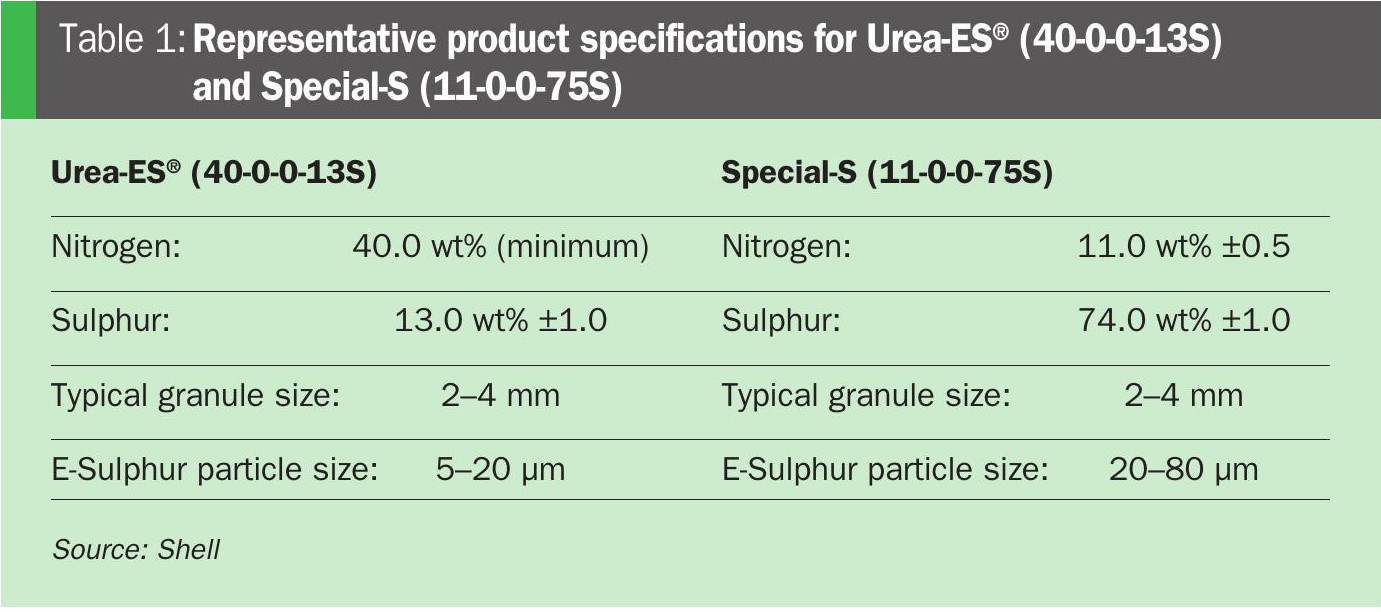
The high nutrient concentration of elemental sulphur (>99% S) enables the production of fertilizers with nutrient-dense formulations (Table 1). For example, while standard urea contains 46% nutrient, Urea-ES® formulations such as 40-0-0-13S and 35-0-0-24S deliver total nutrient contents of approximately 53% and 59%, respectively. Higher nutrient density is a valuable characteristic due to the potential to reduce transportation, storage, and handling costs across the fertilizer supply chain.
Agronomically, urea – by providing a soluble matrix – substantially reduces the delay in sulphur release from the fertilizer product to the soil system. This earlier release to soil, in turn, allows for faster conversion of the elemental sulphur to sulphate for plant uptake.
Development with a focus on performance
Traditionally, two main sulphur fertilizer types were available, both with their own drawbacks: the sulphate fertilizer and elemental sulphur fertilizer families. These have always been placed on opposite ends of the spectrum in terms of sulphur availability.
While sulphate fertilizers were immediately available, there was also a substantial leaching loss potential from the moment of solubilisation in the soil. Sulphur bentonite, in contrast, the traditional elemental sulphur fertilizer, underwent a lengthy oxidation process to sulphate and therefore was less vulnerable to leaching loss.
There are two primary reasons for oxidation delays in traditional sulphur bentonite:
- The time taken for sulphur particle release. This is regulated by the gradual expansion and disintegration of the bentonite clay matrix in contact with moisture. (In Urea-ES® and Special-S, in contrast, the solubility of the urea matrix maximises the speed of sulphur particle release.)
- The time taken for the elemental sulphur to oxidise to sulphate once it is released. This oxidation process is highly size dependent. While differing for each product, the average elemental sulphur particle in sulphur bentonite is relatively large, being generally greater than 150 micrometres.
For elemental sulphur, the interaction of particle size and microbial activity holds the key to sulphur oxidation and availability – with a large particle size limiting surface area and therefore microbial access. Understanding this dynamic allowed Shell Thiogro Technology to focus on the control of elemental sulphur particle size and tailor this to enhance early season availability.
Although smaller particles can achieve faster oxidation, a particle size of 30-40 micrometres was carefully selected to properly balance nutrient use efficiency with sulphate availability. This optimal size range provides a sulphur oxidation ‘sweet spot’ – being not too fast and not too slow – as it provides sufficient available sulphur for plant uptake while protecting against sulphate leaching loss.
Production technology and emulsion stability
A key technical challenge in sulphur-enhanced urea production is the immiscibility of molten urea and molten sulphur, this arising from differences in their density and surface tension. Shell Thiogro technology addresses this through the formation of a stable urea–sulphur emulsion.
In this process, molten urea and molten sulphur are dispersed using a high-shear mixer, the Shell ThioMill, in the presence of a proprietary additive system (Shell ThioAdd). The result is a stable emulsion consisting of finely dispersed sulphur droplets within a continuous urea phase. This emulsion can be processed using conventional urea solidification technologies, including drum and fluid bed granulation and pastillation.
Pastillation using IPCO Rotoform technology
Shell Thiogro has partnered with IPCO to deploy Urea-ES® and Special-S production on Rotoform pastillation systems. IPCO Rotoform units have been widely used since the late 1970s for solidifying a broad range of chemical products and are characterised by their operational simplicity and product uniformity.
The key benefits of IPCO’s Rotoform pastillation systems are:
• Dry process – there is no cross contamination between the product and cooling medium
• Pastilles solidified directly from the melt – eliminating the energy and equipment costs associated with subsequent crushing, breaking or grinding processes.
• Virtually dust-free production – pastilles are of a highly uniform shape and stability
• Pastilles are free flowing – ideal for handling, blending, storage and further processing.
• Higher bulk density – with better packing properties than bulky flakes
In the Rotoform process, the urea-sulphur emulsion is deposited as uniform droplets across the full width of a moving steel belt, where it is cooled and solidified into dust-free pastilles with diameters of between 2-4 mm (Figure 2).
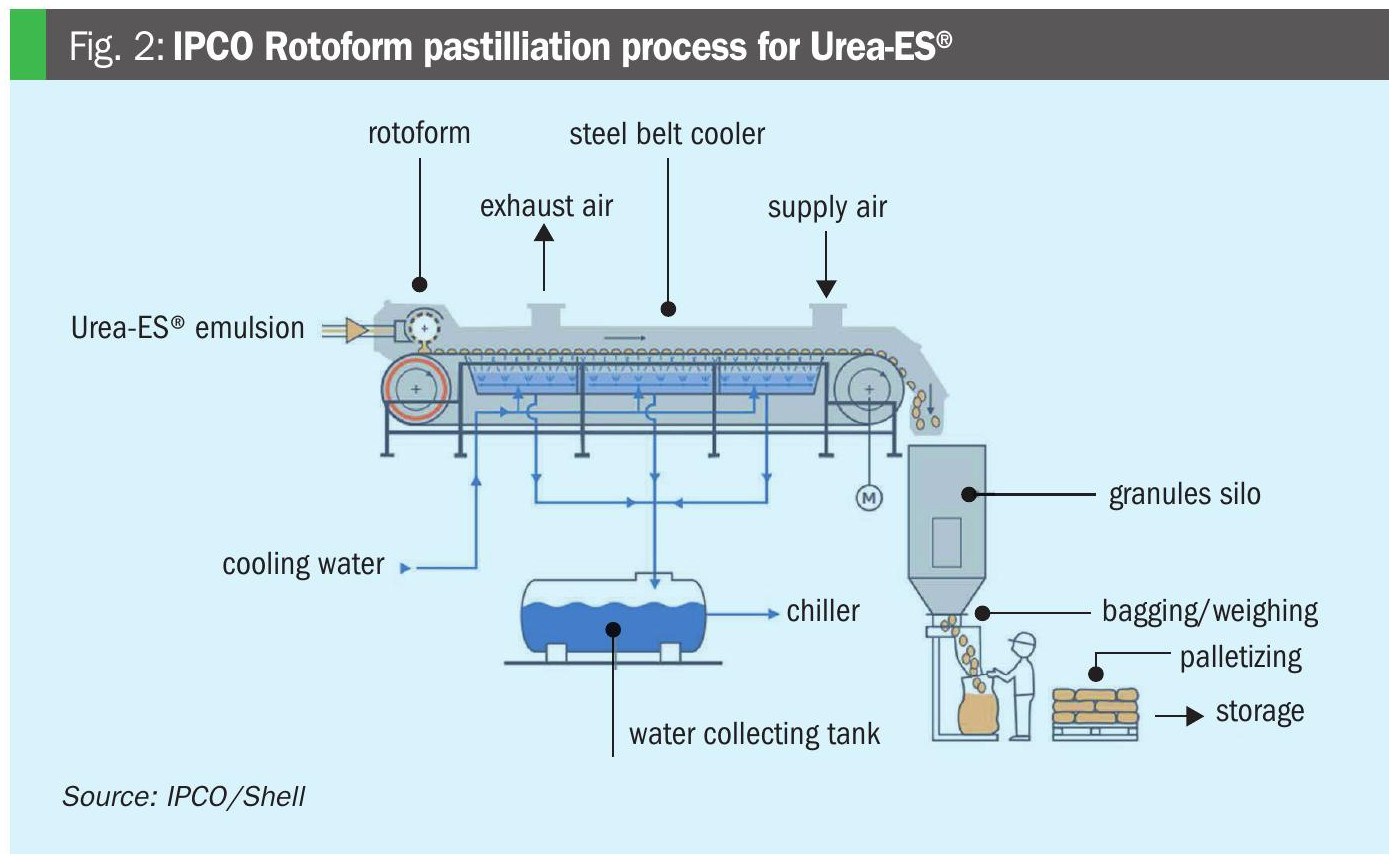
The pastilles are free flowing, mechanically stable, and well suited for storage, blending, and downstream handling.
The production of Shell Thiogro Urea-ES® via the IPCO Rotoform system is modular in nature with production capacity directly related to the number of Rotoform units in operation. This flexibility allows producers to scale capacity incrementally in response to market demand.
Integration into fluidised-bed granulation plants
Shell has also collaborated with thyssenkrupp Uhde to integrate sulphur-enhanced urea production into fluidised-bed granulation plants. In this configuration, the urea-sulphur emulsion is introduced into the granulator, where it is converted into Urea-ES® granules.
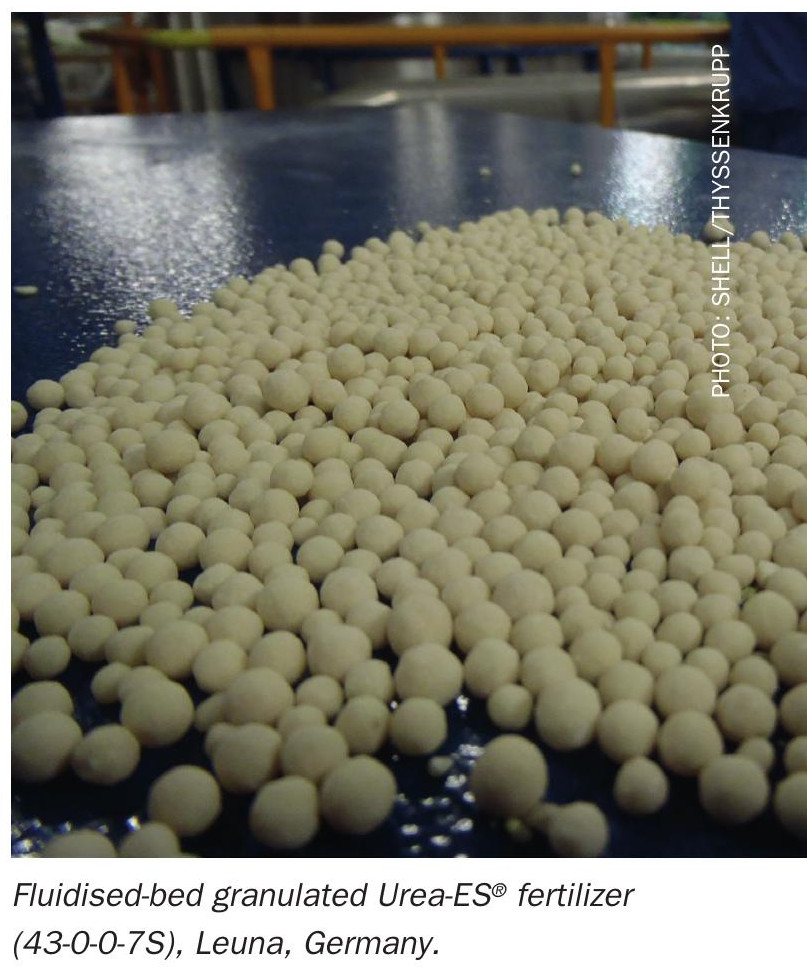
Producing sulphur-enhanced urea in fluidised-bed systems requires a modified recycle and evaporation process to prevent sulphur-containing dust from entering the high-pressure urea synthesis loop. Dedicated evaporation units process recycle streams from the granulation plant, ensuring system integrity while maintaining overall steam efficiency.
The incorporation of elemental sulphur reduces the heat input required during granulation due to sulphur’s lower heat of crystallisation compared with urea. By reducing cooling air requirements, this can also reduce equipment size and capital investment in new plants. In retrofit applications, the reduced load on existing evaporation systems can help deliver higher plant throughput.
Commercial production
The first commercial Special-S facility was commissioned in South Korea in 2019. Since then, additional Urea-ES® and Special-S plants have been licensed in the Middle East and North America, including facilities in the United Arab Emirates and Canada.
Recent capacity expansions reflect growing interest in sulphur-enhanced urea products. In 2025, Shell Trading Canada partnered with Northern Nutrients Ltd in a joint venture to triple the capacity of its Saskatchewan fertilizer plant. This investment is designed to boost local fertilizer production, increase supply security in North America, improve farming efficiency, and advance sulphur utilisation.
Value propositions
Shell Thiogro Technology delivers a range of unique value propositions (Figure 3). While the ability to provide available sulphur nutrition to crops (as previously described) remains the cornerstone, other valuable characteristics also deliver substantial value.
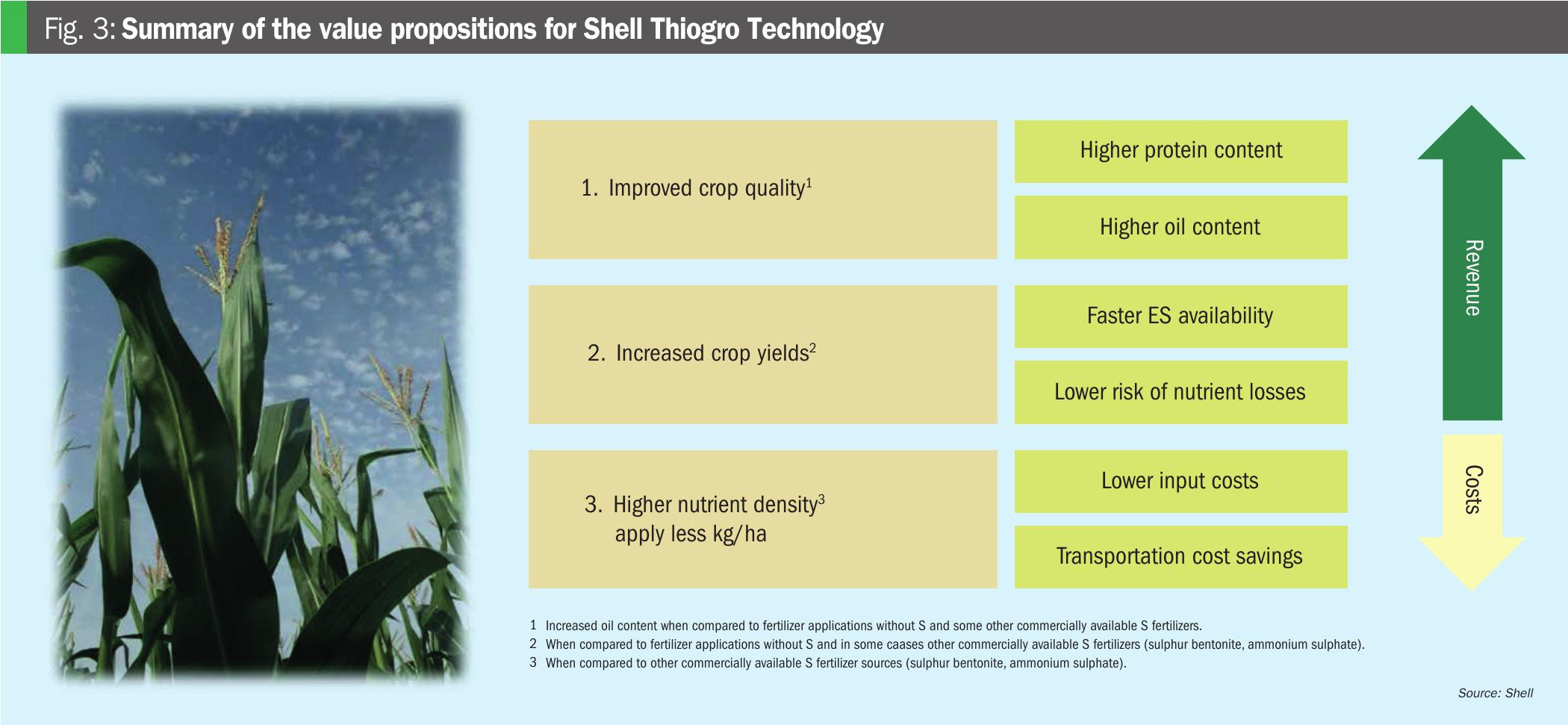
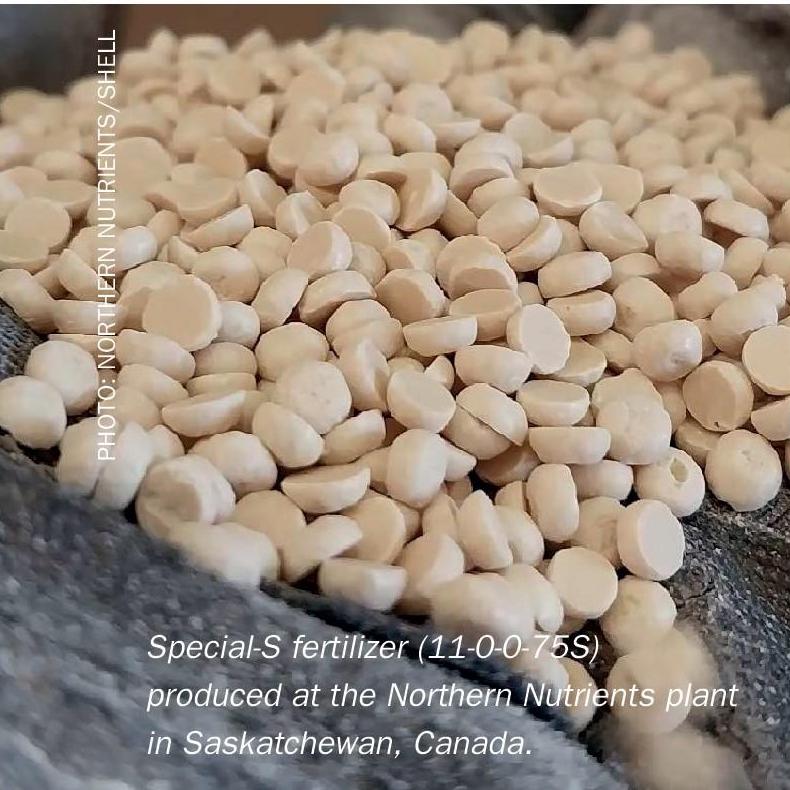
The value of high nutrient density is clear to both the fertilizer producer and the farmer – as it means less transportation, storage space and logistical cost. Special-S (11-0-0-75S), for example has an 86% nutrient content, compared to the 45% nutrient content of ammonium sulphate (21-0-0-24S).
Traditionally, ammonium sulphate contained too much salt at planting, while the oxidation of sulphur bentonite was too slow to provide agronomic benefit. In contrast, farmers can apply Special-S (11-0-0-75S) with crop seeds at the required application rates without the risk of salt injury.
Saline and sodic soil reclamation projects, meanwhile, have found that Special-S functions as an effective in-season amendment that avoids the sudden ‘shock’ of chemical reactions associated with sulphates.
Shell Thiogro Technology has been designed to perform well in both fertilizer blending and field application. Urea-ES® and Special-S provide uniform blends and spread well with traditional nitrogen, phosphorus and potassium fertilizers due to their density, size, and high performance.
Carbon footprint reduction
Reducing greenhouse gas emissions (GHGs) and the carbon footprint of fertilizers are environmental priorities in agriculture. Shell Thiogro Technology can reduce the climate impacts of fertilizer production and use in two ways:
1. Greater nutrient efficiency and availability help to deliver more productive crop output per unit of fertilizer input.
2. The potential for reducing nitrogen losses from ammonia volatilisation and N2O emissions is another more direct benefit.
In a recent study, Urea-ES® and Special-S, when combined with a urease inhibitor, demonstrated a significant reduction in ammonia volatilisation, relative to standard urea treated with a urease inhibitor. Additionally, Shell Thiogro Technology has been shown to reduce N2O emissions with, and independent of, nitrification and urease inhibitors2 .
Conclusions
The increasing prevalence of sulphur-deficient soils, combined with pressure to improve nutrient efficiency, is driving interest in sulphur-enhanced nitrogen fertilizers. Technologies that integrate elemental sulphur directly into urea offer a practical pathway to addressing these challenges at scale. As fertilizer producers seek to diversify portfolios and enhance product performance, sulphur-enhanced urea formulations are also likely to play an increasingly important role in global nutrient management strategies.
References
About the authors
Rafael Garcia-Martinez is Senior Technical Advisor – Thiogro, Fertilizers and Sulphur SME, Shell Canada Limited. Dr Kent Martin is Professor of Agronomy, Northwestern Oklahoma State University, and Shell Thiogro Consulting Global Agronomist.