North America

northern nutrients sulphur manufacturing plant saskatoon

Press Release: Northern Nutrients announces new ownership structure and plant expansion


Northern Nutrients’ Press Release: 12 June 2025,Saskatoon, Canada

As part of this new strategic partnership, Shell Trading Canada has invested in expanding Northern Nutrients’ current facility, resulting in the formation of a new joint venture. The expansion will result in a tripling of current capacity of 50,000mt to 150,000mt annually of sulphur focused fertilizers.
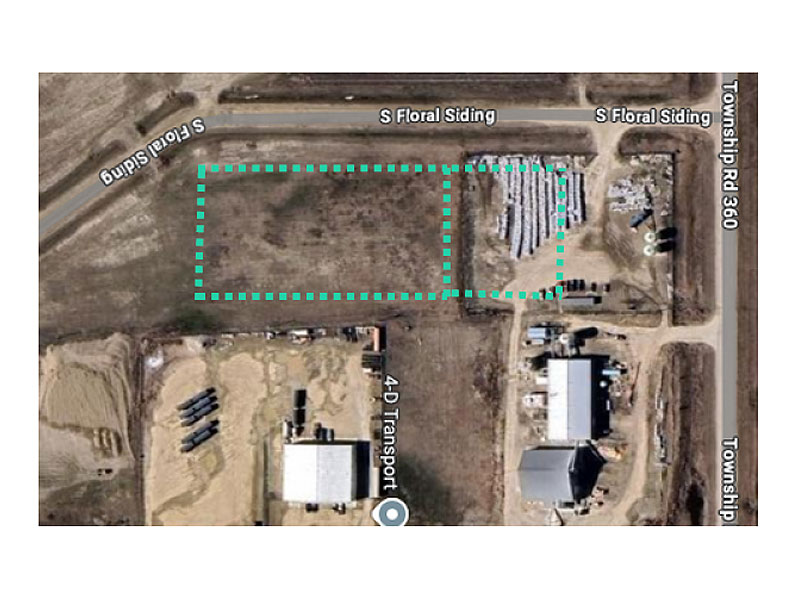
Aerial view of the future site for Northern Nutrients’ sulphur manufacturing plant in the East Floral Industrial Park

Founded in 2016, Northern Nutrients has been at the forefront of bringing innovative solutions to the agriculture market for close to a decade. The company’s state-of-the-art facility near Saskatoon produces enhanced nitrogen sulphur fertilizers using the Shell Thiogro Technology. Their flagship product, Arctic S, boasts an impressive composition of 11% nitrogen and 75% micronized elemental sulphur.

The collaboration between Northern Nutrients and Shell underscores their shared dedication to providing retailers & farmers with high-quality, and efficient fertilizer solutions. The expansion of the Saskatoon facility is expected to boost production capacity and meet the growing demand for innovative fertilizer products. The project is expected to create close to 60 full time construction jobs, as well as numerous full time positions in ongoing operations.

“Since local production of Arctic S began in 2022, the market response across North America has exceeded our expectations making now the perfect time to expand our production capacity, and Shell the perfect partner to do it with.” says Ross Guenther, CEO & co-owner of Northern Nutrients.

Northern Nutrients Co-Owner Rob Owens adds “Bringing Shell Trading Canada on as a strategic joint venture partner makes sense on multiple levels to continue the momentum Northern Nutrients has built over the past few years.”

Latest in North America

Acid leak into ship canal

Around 1 million gallons of sulphuric acid was released from an industrial facility, some of it into the Houston Ship Channel, in late December. A pipeline ruptured when an elevated walkway collapsed at the BWC Terminals facility in Channelview, east of Houston. Two people were transported to a hospital and subsequently released, while 44 others were treated and released at the scene. BWC Terminals said in a statement the majority of the sulphuric acid released was into a designated containment area, with a smaller, unknown amount entering the ship channel.

Mixed smelter for Tennessee

Korea Zinc says it will partner with the US government to construct a critical minerals smelter in Clarksville, Tennessee, producing zinc, lead, and copper. Korea Zinc will begin site preparation next year, followed by phased commercial operations from 2029. The plant is planned to process around 1.0 million t/a of raw materials and turn out 540,000 st/a of finished products. Processing of gold, silver, and key strategic minerals such as antimony, indium, bismuth, tellurium, cadmium, palladium, gallium and germanium, are also planned in what is being touted as a "state-of-the-art" facility. Sulphuric acid and semiconductor-grade sulphuric acid will also be produced. The output will include 300,000 t/a of zinc production, 200,000 t/a of lead, 35,000 t/a of copper and 5,100 t/a of rare and strategic metals. Development will be through Korea Zinc’s US subsidiary, Crucible Metals.

Capacity increase at Heartland Sulphur

Heartland Sulphur says that it has debottlenecked its crushed bulk sulphur remelting operations, increasing capacity by 40%. Heartland says that the increase boosts the company’s sulphur handling efficiency and service capability for producers and buyers. It has also completed a full feasibility study and retained engineering partners to add an additional 1,000 t/d of sulphur remelt capacity, slated to be fully operational by yearend 2026. Heartland Sulphur can form 4,500 t/d for offshore markets, transport molten sulphur by tank car to destinations across North America, and accept and condition sulphur in both molten and solid states. The company’s existing remelt capacity stands at 700 t/d and is projected to reach a total of 1,700 t/d (560,000 t/a) by the end of 2026.

Arianne to receive government support

Arianne Phosphate says that the government of Canada has approved contribution funding of up to C$735,000 to support the company’s ongoing work on processing phosphate rock and optimising its purified phosphoric acid (PPA) process. The funding, provided through Natural Resources Canada’s Critical Minerals Research, Development and Demonstration programme, is part of a C$80.3 million investment announced by Prime Minister Mark Carney to help build secure critical minerals supply chains in Canada. Phosphate was added to the Canadian critical mineral list in 2024. Arianne’s Lac à Paul project is the only fully permitted phosphate mine in the country. Arianne is now actively pursuing opportunities for the downstream production of PPA, a necessary ingredient for lithium-iron-phosphate batteries.

Green ammonia project “economically unfeasible”

World Energy GH2 has shelved its 1.2 GW green hydrogen and ammonia project in Stephenville, Newfoundland, after failing to secure offtake agreements. Project Nujio’qonik was conceived as a major green hydrogen/ammonia scheme backed by 2 GW of new wind capacity, intended to export green ammonia to Europe. However, despite a $50 million investment from South Korea’s SK Eco-plant and high-profile endorsement by then German chancellor Olaf Scholz, the developer has confirmed that the project is being replaced by a new initiative, called Clean Grid Atlantic, which will use the wind resource to power domestic markets instead.