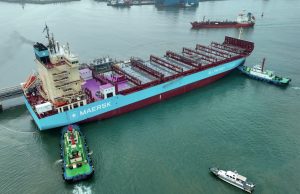
Methanol and shipping
Methanol continues to be a front runner among alternative fuels for the shipping industry. However, concerns remain over the availability and cost of green and blue methanol.


Methanol continues to be a front runner among alternative fuels for the shipping industry. However, concerns remain over the availability and cost of green and blue methanol.
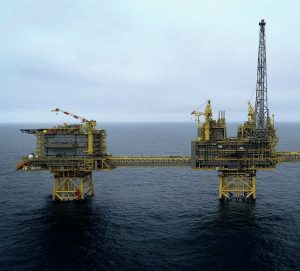
As Europe struggles to move away from its previous dependence on imported Russian natural gas, prices have been high and volatile, with a corresponding catastrophic impact upon domestic ammonia production.

Proman has signed a memorandum of understanding (MoU) with Mitsubishi Corp to collaborate on the development of a blue ammonia plant at Lake Charles, Louisiana. This new facility will aim to produce around 1.2 million t/a of low carbon ammonia, making it one of the largest of its kind in the world. The plant will incorporate carbon capture and sequestration technology. Proman says that this development aligns with the company’s commitment to sustainability and reducing greenhouse gas emissions. The proposed ammonia plant will be located at Proman’s existing site in Lake Charles, adjacent to its gas-to-methanol plant, which is also currently being developed.

Jiangsu Sailboat Petrochemical has started up a CO2 -to-methanol plant at the Shenghong Petrochemical Industrial Park. The plant was developed in conjunction with Iceland’s Carbon Recycling International (CRI), with the plant brought to life in under two years from the initial contract signing. The methanol plant uses CRI’s proprietary emissions-to-liquids (ETL) technology, transforming waste carbon dioxide and hydrogen gases into sustainable, commercial-grade methanol. According to CRI, uses 150,000 t/a of carbon dioxide sourced from waste streams at the large petrochemical complex as feedstock, significantly reducing emissions that would have otherwise been released into the atmosphere. The plant has the capacity to produce 100,000 t/a of sustainable methanol, used primarily to supply Jiangsu’s methanol to olefins facility to produce chemical derivatives, including sustainable plastics and EVA coatings for solar panels. This is expected to reduce the reliance on fossil-based methanol to drive more sustainable value chains and carbon footprint reduction initiatives across various sectors, such as industrial manufacturing and renewable energy.
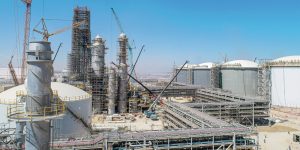
While producing ammonia with hydrogen from electrolysis remains expensive, large scale lower carbon ammonia has focused on carbon capture and storage from existing plants, so-called ‘blue’ ammonia. But exactly how green is blue?
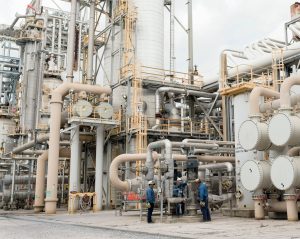
Liquid fertilizers are prized because of their flexibility – especially the freedom to blend nutrients together to create customised products for growers. Dr Karl Wyant, Nutrien’s Director of Agronomy, offers guidance on compatibility and safety, two key concerns when blending and handling liquid fertilizers.

Intermodal Solutions Group (ISG) is introducing a container-based storage, transport and ship loading system for bulk fertilizers. The company’s innovative Pit to Ship Solutions ™ system could transform fertilizer logistics and help the sector meet its environmental, social and corporate governance (ESG) goals.

Many crops are sensitive to chloride due to a genetic susceptibility. Similarly, crops can become stressed when soil salinity reaches high levels, a situation that typically occurs in water scarce regions. So, when is low-chloride crop nutrition needed? Dr Heike Thiel of K+S Minerals and Agriculture GmbH provides some answers.
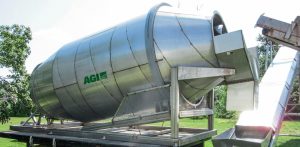
Ag Growth International (AGI) is a leading manufacturer of fertilizer blending systems. Robert Fitzpatrick, AGI’s product segment manager, highlights the latest innovations in fertilizer blending equipment and explains how these contribute to operational efficiency and agricultural productivity.
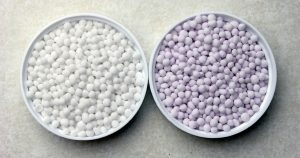
The quality of finished fertilizers can be maintained during transport, handling and storage by protecting the surfaces of granules and prills with coating agents. Valuably, fertilizer coatings can also be used to control the release of nutrients in the field.