Sulphur concrete sleepers: durable and reliable
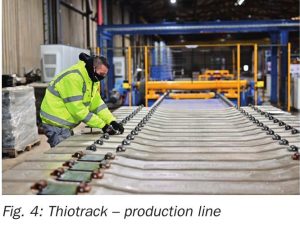
Thiomaterials reports on the key features and successful performance of Thiotrack sulphur concrete sleepers, offering high fatigue endurance with a truly reversible circular binder.
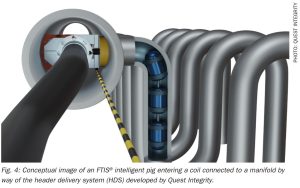
The convection section of a syngas reformer is vulnerable to creep, corrosion, erosion, fretting and fouling which can cause deformation, local metal loss and failures that risk plant shutdown. Inspection access is limited, but solutions are available. Quest Integrity discusses life management of the reformer convection section to reduce unplanned outages.
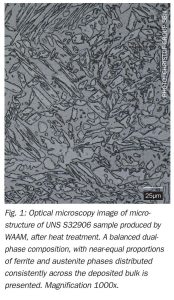
Christof Group SBN is actively integrating advanced manufacturing solutions such as wire arc additive manufacturing (WAAM) into its portfolio for the manufacture of high-pressure equipment in urea and ammonia plants.
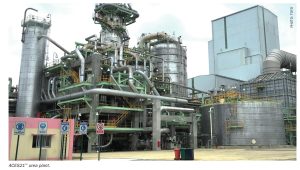
Toyo Engineering Corporation, Stamicarbon and Saipem showcase their state-of-the-art urea technologies.
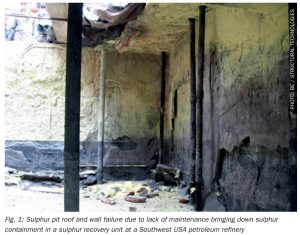
A full sulphur pit turnaround and rehabilitation is typically a once in a lifetime experience for refinery personnel. Specialists in sulphur pit turnarounds, Gavin Palmer of Brindley Engineering, Tom Kline and Bob Hall of Structural Technologies have compiled a database based on multiple sulphur pit turnarounds to identify typical deficiencies in mechanical systems, along with improvements to enhance operability, restore functionality and meet all codes/standards and best practices.
Green urea is urea based on green ammonia produced from renewable power via electrolysers and bio-based carbon dioxide and its colour is the same as normal urea. But in this round table discussion we discuss the possible causes for urea turning a green colour as found by the initiator of this discussion. We will learn that the colour of urea can be reddish or brownish in certain conditions where corrosion rates are high and/or oil fouling is high. But what can cause urea to turn green? n
Days 2 and 3 of the CRU’s 38th Nitrogen+Syngas 2025 Expoconference turned to the technical sessions, organised in three parallel streams covering: green ammonia technology, nitric acid and ammonium nitrate, plant operations and reliability, urea technology, digitalisation, carbon capture, emissions reduction and sustainable fertilizer production, and fertilizer finishing.
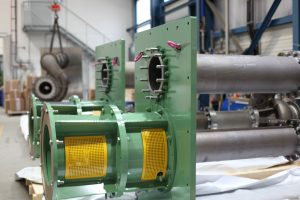
The production of urea, a critical component in the fertilizer industry, involves highly corrosive environments, particularly in the high-pressure sections of the process. This necessitates the use of advanced materials that can withstand such aggressive conditions to ensure long life and efficiency of urea production plants. Alleima, Stamicarbon, Saipem and TOYO report on their advanced material and equipment solutions for the urea industry.
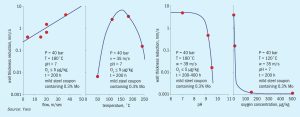
In recent years, extensive and severe internal attack has been observed of carbon steel equipment and lines in aqua ammonia service at several Yara manufacturing sites across the globe. In all cases, the damage has a distinct flow-accelerated corrosion (FAC) signature which challenges the current understanding of FAC. All features typically observed for this kind of damage mechanism, that seem to be specific to the NH3 recovery section of ammonia plant, are reported. Upgrading the material of construction for this unit, will solve this failure mode, but a leak would potentially generate health and safety problem for the release of ammonia.
In Part 3 of this series on stripper efficiency issues, we continue the discussion on some some of the many causes of lower stripper efficiency. Here we discuss liquid divider fouling and bad installation of liquid dividers.