
Integrating REE recovery into phosphate processing flowsheets
Lyndsay Tran, Khanh Pham and Gabriela Olvera of Hatch look at the options for rare earth element (REE) recovery from phosphogypsum (PG) and their relative merits.


Lyndsay Tran, Khanh Pham and Gabriela Olvera of Hatch look at the options for rare earth element (REE) recovery from phosphogypsum (PG) and their relative merits.
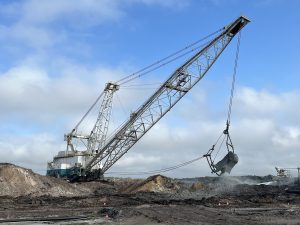
Transformational beneficiation improvements are presented in this case study by Keenan Collins, Jayden Ladebruk and Edward DeRose of Hatch.

CRU’s 2025 Phosphates Conference – now in its 16th year – will be held in Orlando, Florida, 31 March - 2 April next year. The 2024 event convened in Warsaw was one of the most successful to date (Fertilizer International 519, p4).

In our May/June issue I discussed the race to be the next major green shipping fuel, in which methanol and ammonia both remain significant contenders, but which methanol appeared to be pulling ahead in. But more recently, a few stories from the past few weeks have left me not quite as sure as I was about that. Firstly, there’s the news in our Syngas News section this issue that the FlagshipONE green methanol project in Sweden is being delayed and possibly abandoned, because demand for green methanol for shipping has not actually materialised as fast as was anticipated.

Intermodal Solutions Group (ISG) is introducing a container-based storage, transport and ship loading system for bulk fertilizers. The company’s innovative Pit to Ship Solutions ™ system could transform fertilizer logistics and help the sector meet its environmental, social and corporate governance (ESG) goals.
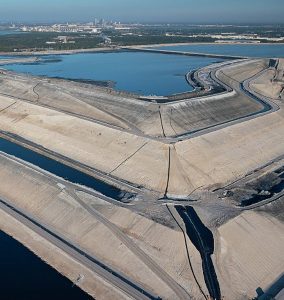
In this review article, Hatch’s Jayden Ladebruk, Lyndsay Tran, Amelia Parrenin, and Edward DeRose outline the wide range of phosphoric acid production technologies, and discuss how industry challenges are influencing the choice of phosphoric acid process.
Storing urea under hot and humid ambient conditions can be a chall enge. Several quality parameters of the urea product itself like moisture, temperature and particle size distribution are critical. Fluctuations of these parameters over time are also important and can lead to caking issues and complaints by clients. Off-spec product means big losses in revenue and results in a troublesome stream that has to be handled separately. Learning from each other’s experiences is vital to minimise and avoid these problems. n

What lessons can be learnt from the successful commissioning and start-up of major fertilizer industry construction projects? Recent case studies from the nitrogen, phosphate and potash industries provide some interesting answers.
Shell Global Solutions International BV (Shell) has awarded Worley two contracts for PT Pertamina EP Cepu’s (PEPC) new sulphuric acid plant in Indonesia. This plant is part of the Jambaran-Tiung Biru utilised gas field project for PEPC, which is a subsidiary of PT Pertamina-Indonesia’s state-owned energy company. Under the contracts, Worley will supply be supplying Chemetics’ cooled oxidation reactor (CORE) technology. This is the first time that CORE will be paired with Shell’s Cansolv SO2 capture technology. Worley gained the Chemetics technology as part of its Jacobs Energy, Chemicals and Resources acquisition last year. Cansolv controls the emissions and captures additional by-product value from the sulphur dioxide emitted from various refinery flue gas streams (such as cracking units, process heaters and boilers), sulphur plants and spent acid regeneration units. Sulphur dioxide can be recycled to the sulphur recovery unit to be produced as marketable sulphur or converted to sulphuric acid.