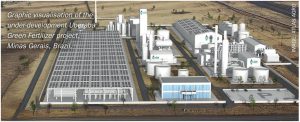
Brazil’s UGF project – delivering the energy transition
Brazil is well-positioned to lead the global transition to low-carbon ‘green’ fertilizers, suggests Petter Ostbo, CEO and founder, Atlas Agro.


Brazil is well-positioned to lead the global transition to low-carbon ‘green’ fertilizers, suggests Petter Ostbo, CEO and founder, Atlas Agro.

Latin America has become a desirable destination for green ammonia projects. This is linked to the region’s abundance of relatively inexpensive renewable energy, and large-scale fertilizer demand from a growing, high-value and import-dependent agricultural market. Ahead of Fertilizer Latino Americano 2025, Fertilizer International discusses regional green ammonia project prospects with leading players ATOME, Casale, Atlas Agro and Stamicarbon.

The last year has seen the first shipments of low-carbon ‘green’ fertilizers from companies such as Yara, Fertiberia, OCI and Sabic Agri-Nutrients. Partnerships with food manufacturers and retailers are helping to grow this emerging market and drive demand.

OCI Global says that it has reached an agreement for the sale of 100% of its equity interests in its Clean Ammonia project currently under construction in Beaumont, Texas for $2.35 billion on a cash and debt free basis. The buyer is Australian LNG and energy company Woodside Energy Group Ltd. Woodside will pay 80% of the purchase price to OCI at closing of the transaction, with the balance payable at project completion, according to agreed terms and conditions. OCI will continue to manage the construction, commissioning and startup of the facility and will continue to direct the contractors until the project is fully staffed and operational, at which point it will hand it over to Woodside. The transaction is expected to close in H2 2024, subject to shareholder approval.
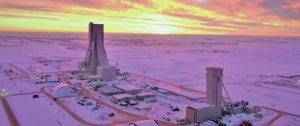
BHP has approved an investment of $4.9 billion (CAD 6.4 billion) in stage two of its Jansen potash project (Jansen Stage 2) in Saskatchewan, Canada.
Mining, metals and fertilizer business intelligence company CRU has launched a new low-emissions ammonia (LEA) price assessment in its Fertilizer Week price reporting service. The price takes a value-based approach, whereby a premium on the Northwest European ammonia price is calculated on an emissions-mitigated basis, and leverages CRU’s proprietary nitrogen asset emissions data combined with weekly European carbon prices to calculate the value of emissions mitigated. CRU says that it has leveraged its Emissions Analysis Tool to develop the premiums on an emissions-mitigated basis as opposed to a cost basis, allowing end-users to assess how the switch to LEA can deliver value to their business while contributing to their decarbonisation strategies. The Emissions Analysis Tool is a comprehensive asset-byasset emissions dataset for the nitrogen industry.

The first global review of phosphate rock resources since 2010 has reported that technically recoverable reserves should last for more than 300 years.