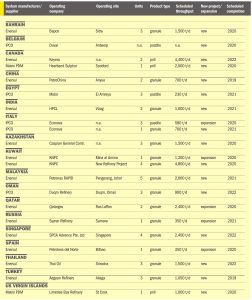
Sulphur forming project listing 2020
Sulphur ’s annual listing of new or recently completed sulphur forming projects worldwide covers both new sour gas and refinery sulphur forming projects as well as upgrades at existing units.


Sulphur ’s annual listing of new or recently completed sulphur forming projects worldwide covers both new sour gas and refinery sulphur forming projects as well as upgrades at existing units.
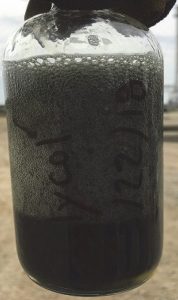
Although amine solution foaming problems have been studied and reported extensively, direct correlations about the root causes of foaming have not been completely established. This article approaches the problems of foaming from a different perspective, rather than theoretical discussions, the topic is centred exclusively on Amine Experts’ field-related experiences with amine foaming episodes.
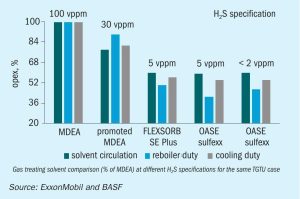
The removal of hydrogen sulphide (H2 S) has become increasingly important as the oil and gas industry moves towards more efficient and sustainable production of lower emission clean fuels. BASF and ExxonMobil* have jointly developed a proprietary amine, OASE® sulfexx™ , to help refiners and gas processors achieve sulphur removal targets while reducing their carbon footprint via lower energy consumption. This new solvent technology is suitable for low and high pressure applications and shows superior performance characteristics over generic and promoted MDEA formulations, as well as sterically hindered amines such as FLEXSORB™ SE and SE Plus.
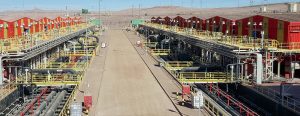
There was a rapid increase in sulphuric acid demand for copper, uranium and nickel leaching from 1995-2015, but over the past few years growth in this sector has slowed dramatically. Now however there are signs that demand is starting to pick up again with several new projects under development.
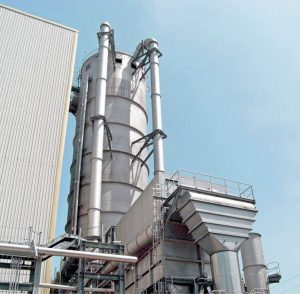
Kreber’s R&D department has been researching the prilling of sulphur in pursuit of the ideal process. In this article, T. Nieboer of Kreber recounts the history of prilling up to today, tracing the developments and highlighting the challenges that still remain.
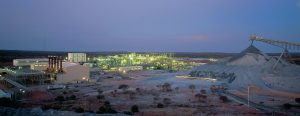
Sulphur demand in Australia has been boosted by the restart of the nickel leaching plant at Ravensthorpe, and new HPAL projects are under development, but a slew of new phosphate projects are not scheduled to consume more acid domestically.
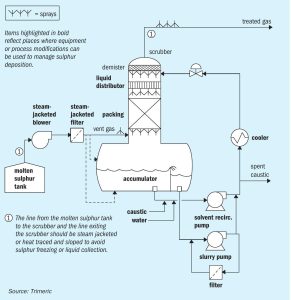
With increasing frequency, companies that have molten sulphur on site must put environmental controls on the vent streams from molten sulphur pits, storage tanks and loading operations. This article* describes the typical characteristics of molten sulphur vent gas streams as well as some of the important chemistry related to these systems in caustic scrubbers. Solids deposition issues observed in the field with caustic scrubbers operating on actual molten sulphur vent gas streams are presented. Design and operational strategies to mitigate plugging in molten sulphur vent gas scrubbers are also summarised in this article by D. J. Sachde, K. E. McIntush, D. L. Mamrosh , and C. M. Beitler of Trimeric Corporation.
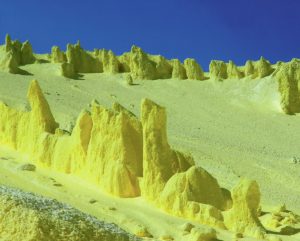
A look at the major factors influencing the sulphur market around the world.
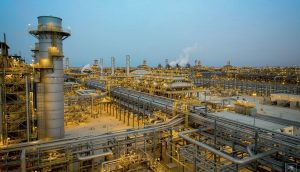
Sulphur’s annual survey of recent, current and future sulphur recovery unit construction projects maps the developing shape of brimstone production from fuel and gas processing plants worldwide.

The Indonesian government’s decision to enforce the processing of more copper and nickel ores domestically rather than export them to China has led to the rapid development of domestic smelter capacity as well as nickel acid leaching projects.