Section: CRUNS Industry News

Syngas News Roundup

The UK has published its Hydrogen Strategy, setting out the government’s ambition to create a low carbon hydrogen sector, with up to one third of the UK’s energy consumption being hydrogen-based by 2050. The commitments set out in the strategy unlocks £4 billion of government investment by 2030. The government plans 5GW of low carbon hydrogen production capacity and the establishment of carbon capture, use and storage (CCUS) in four industrial clusters by 2030, as well as blending of hydrogen into the existing gas network and a ‘twin-track’ approach to hydrogen production, using both electrolytic and CCUS-enabled low carbon hydrogen production in order to scale up production in time to meet the UK’s 2030 and 2050 carbon emissions targets.

Syngas News Roundup

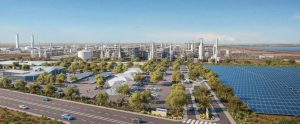
A consortium has unveiled plans to build one of the largest green hydrogen plants in the world in a bid to make Oman a leader in renewable energy technology. The $30 billion project is being developed by Oman’s state-owned oil firm OQ, green fuels developer InterContinental Energy and Kuwait government-backed renewables investor EnerTech. Construction is scheduled to start in 2028 in Al Wusta governorate on the Arabian Sea. It will be built in stages, with the aim to be at full capacity by 2038, powered by 25 GW of wind and solar energy. Two years has already been spent on solar and wind monitoring analysis for the development. According to the consortium, the site chosen has the optimal diurnal profile of strong wind at night and reliable sun during the day, and is also located near the coast for seawater intake and electrolysis.

Nitrogen Industry News Roundup

The Chemical & Process Technologies business unit of thyssenkrupp Industrial Solutions is celebrating a milestone in 2021. It is one hundred years since engineer and entrepreneur Friedrich Uhde founded his own plant engineering company in a barn at his parents-in-law’s farm in Dortmund-Bövinghausen on April 6th, 1921. Now, in this centenary year, the origins of the firm are to become visible in its name again: thyssenkrupp is changing the business unit’s name to thyssenkrupp Uhde.

Syngas News Roundup

A recent report from BloombergNEF (New Energy Foundation) looking ahead to 2050 argues that green hydrogen can be cheaper than natural gas. It finds that ‘green’ hydrogen from renewables should become cheaper than natural gas (on an energy-equivalent basis) by 2050 in 15 of the 28 markets modelled, assuming scale-up continues. These countries accounted for one-third of global GDP in 2019. In all of the markets BNEF modelled, ‘green’ hydrogen should also become cheaper than both ‘blue’ hydrogen (from fossil fuels with carbon capture and storage – CCS) and even ‘grey’ hydrogen from fossil fuels without CCS. The cost of producing ‘green’ hydrogen from renewable electricity should fall by up to 85% from today to 2050, the report predicts, leading to costs below $1/kg ($7.4/MMBtu) by 2050 in most markets. These costs are 13% lower than BNEF’s previous 2030 forecast and 17% lower than their previous 2050 forecast. Falling costs of solar photovoltaic (PV) electricity are the key driver behind the reduction; BNEF now believes that PV electricity will be 40% cheaper in 2050 than they had thought just two years ago, driven by more automatic manufacturing, less silicon and silver consumption, higher photovoltaic efficiency of solar cells, and greater yields using bifacial panels.

Syngas News Roundup

The Nigerian National Petroleum Corporation (NNPC) says that it plans to build a $3 billion methanol plant on Brass Island in the Niger Delta to produce up to 10,000 t/d of methanol using from gas supplied by Shell. A final investment decision was made by NNPC, DSV Engineering and the Nigerian Content Development and Monitoring Board, a state agency set up to ensure Nigerian involvement in oil and gas projects. Around 70% of funding for the project will come from international lenders, including the China Export-Import Bank, the African Development Bank and international commercial banks, with the rest funded from an equity issue. BP has signed a 10 year offtake deal for the plant’s output with the Brass Fertilizer & Petrochemical Company, the entity set up to operate the plant. Construction of the plant is expected to be completed by 2025.

Nitrogen Industry News Roundup

Copenhagen Infrastructure Partners (CIP) has unveiled plans to build Europe’s largest power-to-ammonia facility at the Danish port of Esbjerg, based on electricity from offshore wind turbines. The company said the plant will consist of 1GW of electrolysis capacity, capable of supplying sufficient hydrogen to produce 300,000 t/a of ammonia, and that the ammonia will be used as both as agricultural fertiliser and as fuel for the shipping industry. Excess heat generated in the process would be used to provide heating for around one third of local households in communities around the plant, to be sited on the west coast of Denmark. The company has signed a memorandum of understanding for the project with companies from both the agriculture and shipping sectors, including Danish Crown, Arla, DLG, Maersk and DFDS Seaways. CIP anticipates that it would cost approximately $1.2 billion to build the facility. They are currently seeking investors for the project and expect that the investment decision would be reached by 2023. The plant could enter commercial operations in 2026.

Syngas News Roundup

Johnson Matthey (JM) has secured a multiple licence for China’s Ningxia Baofeng Energy Group’s latest project to develop five of the largest single train methanol plants in the world. Located at Baofeng’s Ordos City complex in Inner Mongolia, the five plants each have a planned capacity 7,200 t/d. Under the agreement Johnson Matthey will be the licensor of all five plants and supplier of associated engineering, technical review, commissioning assistance, and catalyst. The plants will take synthesis gas as a feed and use JM radial steam raising converters in a patented series loop. Within the design, there is potential for 1-2% more feedstock efficiency over the life of the catalyst. Thanks to JM’s methanol loop synthesis technology, the plants will provide enhanced energy savings along with low OPEX, CAPEX and emissions. When complete, the plants will represent JM’s 13th operating license in China for a mega-scale plant (>5,500 t/d) and the fourth JM methanol design licensed by Ningxia Baofeng Energy.

Nitrogen Industry News Roundup

Building on its long experience and leading position within global ammonia production, logistics and trade, Yara says that it aims to capture opportunities in green shipping, agriculture and industrial applications; a market expected to grow by 60% over the next two decades. A major first step includes plans to fully electrify its ammonia plant at Porsgrunn, Norway, with the potential to cut 800,000 t/a of CO 2 , equivalent to the emissions from 300,000 passenger cars.